from Salman Haris
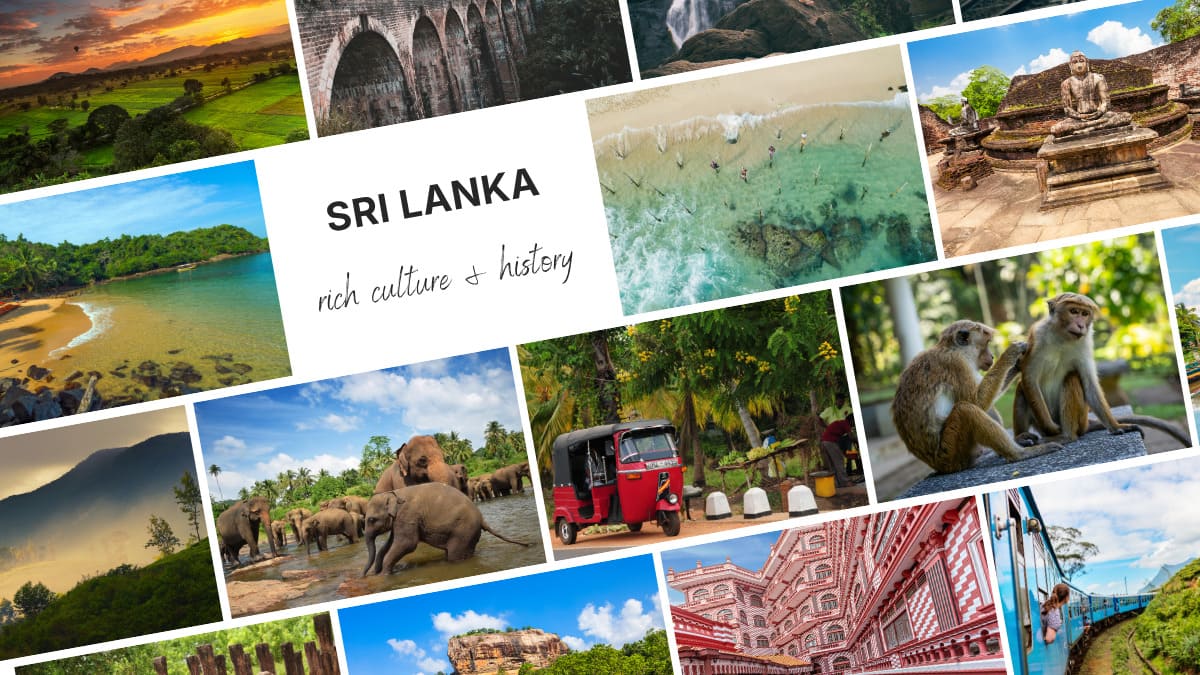
More than beaches, tea and beautiful places, Sri Lanka is about people, food, traditions and everyday moments.
One of the best parts of travelling around Sri Lanka is that the culture changes a little as you move around the island. You might have a Buddhist temple in one neighbourhood, a Hindu kovil a few streets away, a mosque nearby and a church around the corner.
You’ll hear Sinhala, Tamil and English, smell spices coming from a small kitchen, see people sharing food with their hands, hear a cricket match playing somewhere in the background and, quite often, find a stranger smiling and trying to help you. Sri Lankan culture is not something you only see at a cultural show. It is part of everyday life.
01. PEOPLE & HOSPITALITY
Sri Lankans are generally warm, curious and welcoming. Hospitality is a big part of everyday life, and being invited for tea, food or even to someone’s home can be a genuine gesture of friendship.
Don’t be surprised if someone asks:“Kohomada?” — How are you?
Or if a local person starts asking where you’re from, how long you’re staying and what places you’ve visited. Sometimes a five-minute conversation can turn into a much longer one. That’s part of the Sri Lankan experience.
A small tip : If someone offers you food or tea, you don’t always have to say yes, but accepting when you can is often appreciated. And don’t be surprised if someone gives you more food than you asked for.
02. GREETINGS
The traditional Sinhala greeting is:“Ayubowan” = May you live long / wishing you a long life. In Tamil, you’ll hear: “Vanakkam” — a respectful greeting. And among Sri Lankan Muslims, “Assalamu Alaikum” is a common greeting.
Sinhala and Tamil are Sri Lanka’s official languages, while English is the link language, so English is widely useful in tourist areas.You don’t need to speak Sinhala or Tamil perfectly. Even trying “Ayubowan” with a smile can make a nice first impression.
03. DRESS & EVERYDAY CLOTHING
Sri Lanka is a tropical country, so you’ll see plenty of T-shirts, shorts, dresses, sandals and light clothing in everyday life. But Sri Lankan society is still fairly conservative, especially away from tourist beaches. Modest clothing is recommended when visiting villages, religious places and some local communities.
For temples and other religious sites, it’s safest to cover your shoulders and knees. A simple sarong can be very useful when travelling around Sri Lanka.
And you’ll notice traditional clothing too, especially the sari and osariya for women and the sarong for men. You don’t need to dress traditionally to visit Sri Lanka. Just dress respectfully for the place you’re visiting.
04. TEMPLES & RELIGIOUS PLACES
Sri Lanka is home to Buddhists, Hindus, Muslims, Christians and other communities. Religion is deeply connected to everyday life, festivals and family traditions.
When entering a Buddhist temple, Hindu kovil, mosque or church, look around first and follow the local customs. At many Buddhist and Hindu sites, you may need to remove your shoes.
At Buddhist sites especially, avoid:
- Touching or climbing religious statues
- Turning your back disrespectfully towards sacred objects when appropriate
- Loud behaviour
- Revealing clothing
And always ask before taking photographs of people during religious ceremonies. A little respect goes a very long way.
05. FOOD: THE HEART OF SRI LANKAN LIFE
If you leave Sri Lanka without trying the local food, you missed a big part of the experience.
Sri Lankan food is colourful, aromatic, coconut-rich and often spicy, although not every Sri Lankan dish is extremely spicy. The classic meal is: Rice & Curry
But “rice and curry” isn’t just one curry. You might get rice with dhal, vegetables, coconut sambol, eggplant, potato, fish, chicken and several other small dishes on the same plate. Sri Lankan cuisine changes from home to home and region to region.
Then there is:
Kottu: chopped roti mixed with vegetables, egg, meat or cheese on a hot plate.
Hoppers / Appa: bowl-shaped pancakes, often eaten with curry, sambol or an egg.
String hoppers / Indi Appa: steamed rice-flour noodles served with curry and coconut-based dishes.
Pittu: steamed flour and coconut, usually eaten with curry or coconut milk.
Pol Sambol: grated coconut mixed with chilli, onion, lime and spices.
Lunu Miris: a spicy onion and chilli sambol.
Watalappam: a rich coconut and jaggery dessert with Malay influence.
And don’t forget the little roadside snacks called short eats: samosas, cutlets, patties and other small bites.
One local tip: Don’t judge Sri Lankan food by one restaurant.Try a small local place too. That’s often where you’ll find the flavours people actually grew up eating.
06. THE SRI LANKAN FLAG
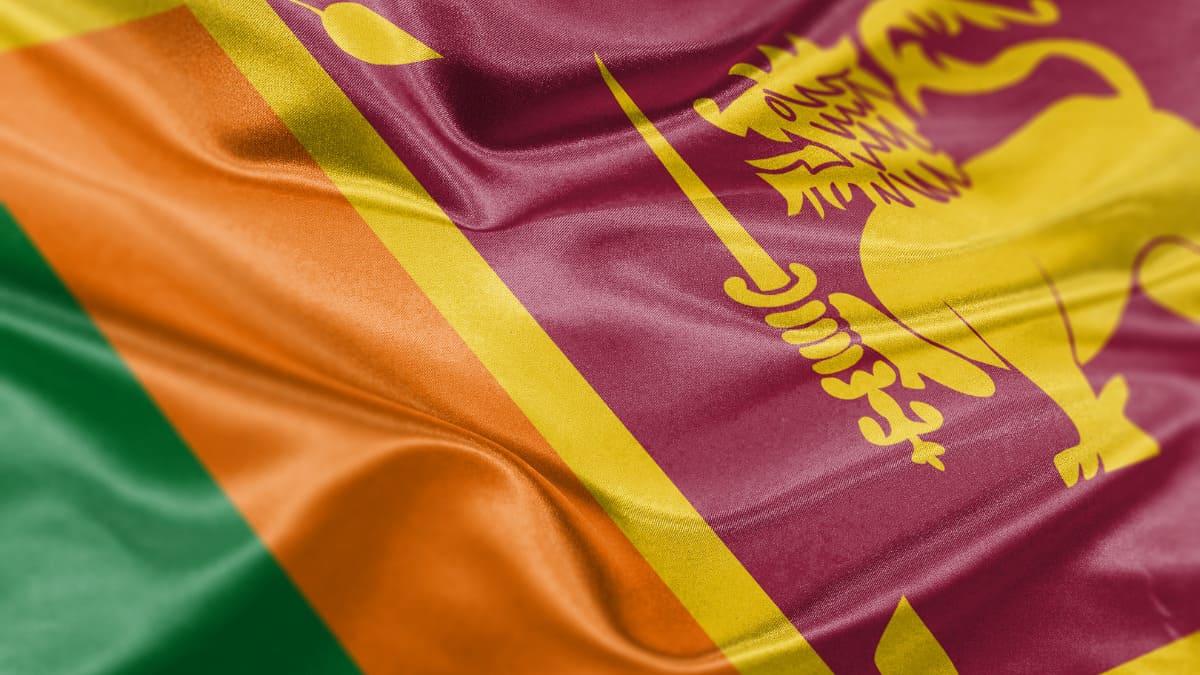
You’ll see the Sri Lankan flag everywhere when you travel around the island, outside homes, shops, schools, government buildings and during national celebrations. But have you ever stopped and wondered what all those colours and symbols actually mean?
The large golden lion is the most recognisable part of the flag.
It represents the Sinhala people and their heritage, while the sword held by the lion represents the country’s sovereignty and strength.
Around the lion are four Bo leaves.
These represent four important Buddhist qualities:
- Metta (loving-kindness),
- Karuna (compassion),
- Mudita (appreciative joy)
- and Upekkha (equanimity).
Then you have the two vertical stripes.
The orange stripe represents the Sri Lankan Tamil community, while the green stripe represents the Sri Lankan Muslim community.
The colours and symbols are brought together inside a golden border, making the flag much more than just something you see flying in the wind.
A little thing to notice : Next time you see the Sri Lankan flag, take a second look. You’re not just looking at a lion, some colours and a few leaves. You’re looking at pieces of Sri Lanka’s history, communities, traditions and identity. All brought together on one flag.
And once you know the story behind it, you might never look at the Sri Lankan flag quite the same way again.
07. EATING WITH YOUR HANDS
In many Sri Lankan homes and local restaurants, eating rice and curry with your right hand is completely normal. Wash your hands first, mix a little rice with the curry and enjoy.
You don’t have to do it if you’re uncomfortable, spoons and forks are widely available. But if you want to experience Sri Lankan food more locally, give it a try.
And one important rule: Use your right hand when eating with your hands.
08. TEA IS MORE THAN A DRINK
“Tea?” is sometimes another way of saying “Come, let’s talk.”
Sri Lanka is famous for Ceylon Tea, and tea is part of everyday social life. You may be offered tea when visiting someone’s home, meeting someone or simply sitting down for a conversation.
In the hills, especially around Nuwara Eliya, Ella and the tea-growing regions, you’ll see tea estates covering the mountains. Try a simple Sri Lankan milk tea or a cup of Ceylon black tea.
And don’t be surprised if someone says: “Let’s have a tea.” It might be the beginning of a much longer conversation.
09. CRICKET
You might arrive as a tourist and leave knowing someone’s favourite cricket player.
Cricket is more than just a sport in Sri Lanka. You’ll see children playing on roads, people watching matches in restaurants and families discussing cricket at home.
If Sri Lanka is playing, you may suddenly understand why everyone around you is looking at one screen. You don’t need to know the rules. Just ask:
“Do you like cricket?” You’ve probably found an easy conversation starter.
10. FAMILY & COMMUNITY
Family plays an important role in Sri Lankan society. It’s common to see several generations staying connected and families gathering around food, religious events, weddings and festivals.
Neighbours can also be an important part of everyday life.This is one reason Sri Lankan homes can feel lively, someone is visiting, tea is being made, food is being shared and there is always something happening.
You may notice that people sometimes ask personal questions such as your age, whether you’re married or where you’re staying. Usually, this comes from curiosity and friendliness, rather than bad intentions.
11. FESTIVALS & CELEBRATIONS
There is almost always something happening somewhere.
Sri Lanka’s different communities bring a huge variety of celebrations throughout the year. Some of the best known include:
Sinhala & Tamil New Year: Aluth AvuruduCelebrated mainly in April with traditional games, family gatherings and special food.
Vesak: A major Buddhist festival known for lanterns, decorations and religious activities.
Deepavali: An important Hindu festival of lights.
Eid: Celebrated by Sri Lankan Muslims with prayers, family gatherings and food.
Christmas: Celebrated by Christians and also enjoyed by many other Sri Lankans.
And there are temple festivals, processions, peraheras, traditional dancing and drumming. Sri Lanka’s calendar is filled with religious and cultural celebrations because of its diverse communities.
And then there are Poya Days. Almost every month, Sri Lanka has a Poya Day, the full-moon day in the Buddhist calendar. Poya Days are especially important for Buddhists and are often spent visiting temples, offering flowers, listening to religious teachings and spending time with family. Each Poya has its own story, with Vesak Poya being one of the most important.
You’ll notice that Poya Days are also public holidays, so some businesses, shops and places may have different opening hours. Alcohol sales are also generally restricted on these days.
If you happen to be travelling in Sri Lanka on a Poya Day, don’t see it simply as another holiday. It’s a chance to see a quieter and more spiritual side of everyday Sri Lankan life.
12. THE SRI LANKAN “YES”
One thing travellers sometimes notice is that Sri Lankans can be very polite.Someone might say “yes, yes” because they don’t want to disappoint you, even if they aren’t completely sure. You may also hear:
“Hari.” — Okay / alright.
If something is important, a booking, price, pickup time or reservation, it’s always better to confirm the details clearly rather than relying only on a casual conversation.
This isn’t about people being dishonest.It’s simply useful to understand that politeness is an important part of communication here.
13. PHOTOS & PEOPLE
Sri Lanka is incredibly photogenic, but remember that you’re photographing real people living their everyday lives.
Before taking a close-up photograph of someone, especially monks, religious ceremonies, workers or children, it’s polite to ask. A simple:“Photo?”is usually enough. And if someone says no, just smile and respect it. You’ll often find that asking first creates a much better interaction anyway.
14. BARGAINING & SHOPPING
At some markets and small shops, negotiating a price can be normal. But don’t assume everything should be bargained down.
For taxis, tuk-tuks, souvenirs and some markets, it’s sensible to agree on the price before starting when there is no meter or fixed price. In regular shops, supermarkets, restaurants and many established businesses, prices are usually fixed.
And remember: saving a tiny amount of money isn’t always worth turning a friendly interaction into an argument.
15. TUK-TUKS & LOCAL TRAVEL
The tuk-tuk is part of everyday Sri Lankan life. It’s useful for short trips, exploring neighbourhoods and reaching places where larger vehicles can’t easily go.
If there is no meter, agree on the price before getting in. And don’t be surprised if your driver starts recommending a restaurant, beach, shop or place you’ve never heard of.
Sometimes it’s a genuine local recommendation. Sometimes… maybe they know someone there. Use your judgement.
16. SRI LANKAN NATURE & THE WAY WE TREAT IT
Sri Lanka has beaches, forests, mountains, wetlands and ancient sites within a relatively small island. That also means travellers have a responsibility to look after them.
Take your rubbish with you, don’t disturb wildlife, stay on appropriate paths and treat sacred and natural places with respect. Sri Lanka Tourism specifically encourages visitors to avoid littering and behave respectfully in temples, forests, villages and ancient sites.
Especially with elephants and other wild animals. Watching from a respectful distance is part of the experience.
17. A FEW LOCAL WORDS TO SAVE IN YOUR PHONE
You don’t need fluent Sinhala or Tamil. Just learn a few.
Some Sinhala words and meanings that you can use.
- Ayubowan = Hello / wishing you a long life
- Kohomada? = How are you?
- Istuti = Thank you
- Hari = Okay / alright
- Ow = Yes
- Na = No
- Kanna = Eat
- Suba dawasak = Have a good day
- Hodhai = Good
Even one or two words can make locals smile because it shows you’re interested in their culture, not only their country.
18. THE MOST IMPORTANT THING TO KNOW
Don’t only visit Sri Lanka. Take a moment to experience it.
Sri Lanka isn’t just Sigiriya, Ella, beaches and tea plantations.
It’s the aunty making breakfast at a small guesthouse.
It’s a tuk-tuk driver telling you about his favourite cricket team.
It’s a stranger showing you the right bus stop.
It’s eating rice and curry with your hands.
It’s sitting down for a tea that turns into an hour-long conversation.
It’s hearing “Come, come, have some” when you thought you were only stopping for five minutes.
The places are beautiful, but the everyday moments are often what you remember longest. And that’s one of the reasons we love travelling around Sri Lanka.
Come with an open mind, respect the people and places you meet, try the food, learn a few local words and don’t be afraid to step away from the usual tourist route. You might discover a side of Sri Lanka that wasn’t on your itinerary at all.
A LITTLE THOUGHT FROM US
Sri Lanka is a small island, but there is a lot to discover.
The food, languages, traditions and even the way people live can change as you travel from one part of the country to another. What feels completely normal in Negombo might be very different in Jaffna, Kandy, the south or the east.
That’s what makes travelling here so interesting. There is always another place, another story, another food to try or another person to meet.
We’ve grown up around many of these little things, and travelling around Sri Lanka has also taught us that sometimes the best experiences are the ones you don’t find in a guidebook.
So come with curiosity. Ask questions, talk to people, try something unfamiliar and leave a little space in your plans for the unexpected. Because Sri Lanka is not only somewhere you visit. It’s somewhere you experience.