
from Sarah Zimmermann
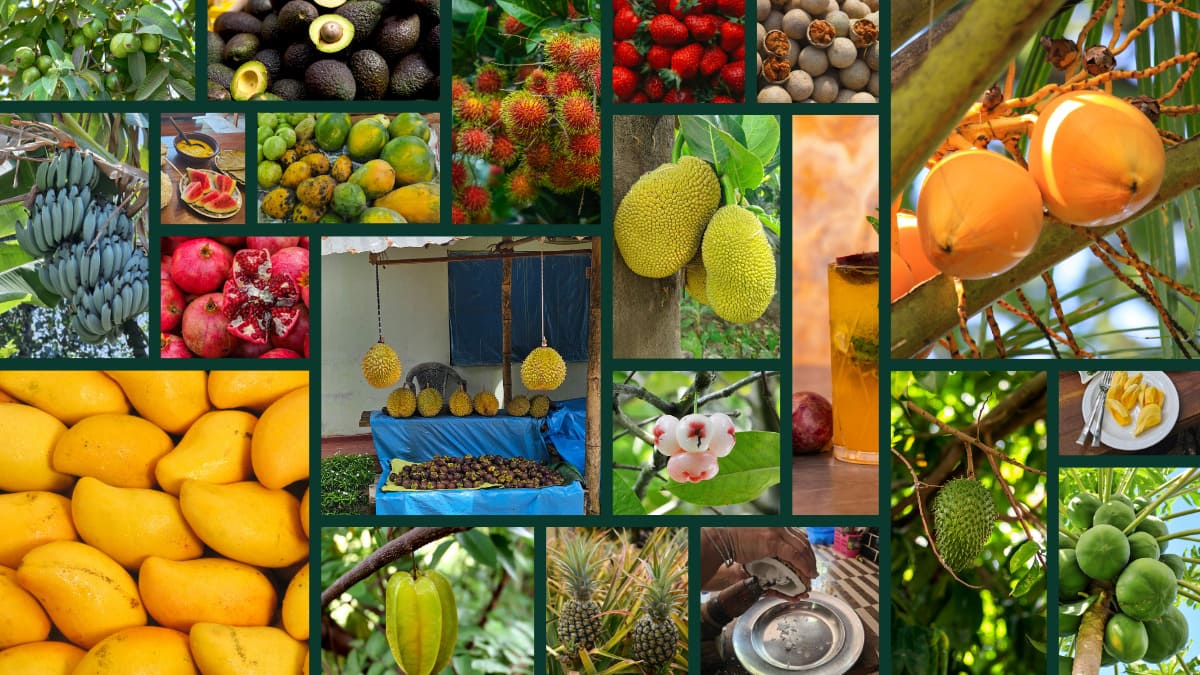
Sri Lanka is full of incredible colours and flavours, especially when it comes to fruit. Of course, you'll find tropical favourites like bananas, mangoes, papayas and pineapples almost everywhere. But one thing I learned pretty quickly after moving here is that not all bananas are the same, and mangoes are definitely not all the same either.
You probably already know many of these fruits from Europe. Still, it's absolutely worth trying them again in Sri Lanka, because some taste completely different from what we're used to buying in European supermarkets. I still remember eating my first really ripe mango here. Not only was it incredibly sweet and full of flavour, but the flesh had this beautiful, deep orange colour. I thought I knew mangoes. Turns out, I didn't know them quite as well as I thought.
And then there are all those fruits you might have never seen before. The ones you discover at a local market and immediately wonder what on earth they are and how you're supposed to eat them. Wood apple, rambutan, mangosteen, soursop, ambarella, jackfruit and so many more. Some are sweet, others incredibly sour, some have a creamy texture, and a few might require a little courage before taking that first bite.
In this guide, we'll introduce you to 26 fruits you can discover in Sri Lanka, explain what they taste like, how they're eaten and when they're in season. You'll also find their names in Sinhala and Tamil, along with some of our personal experiences and tips. And for certain fruits, we'll take a closer look at the different varieties, because there's often much more to discover than you might expect.
Mango
English: Mango
German: Mango
Sinhala: අඹ (Amba)
Tamil: மாம்பழம் (Māmpaḻam)
Let's start with a fruit you probably think doesn't need much explanation. After all, you can find mangoes almost everywhere in the world these days. But trust me, once you've tasted your first perfectly ripe mango in Sri Lanka, you might change your mind. At least that's what happened to me.
What do mangoes taste like in Sri Lanka?
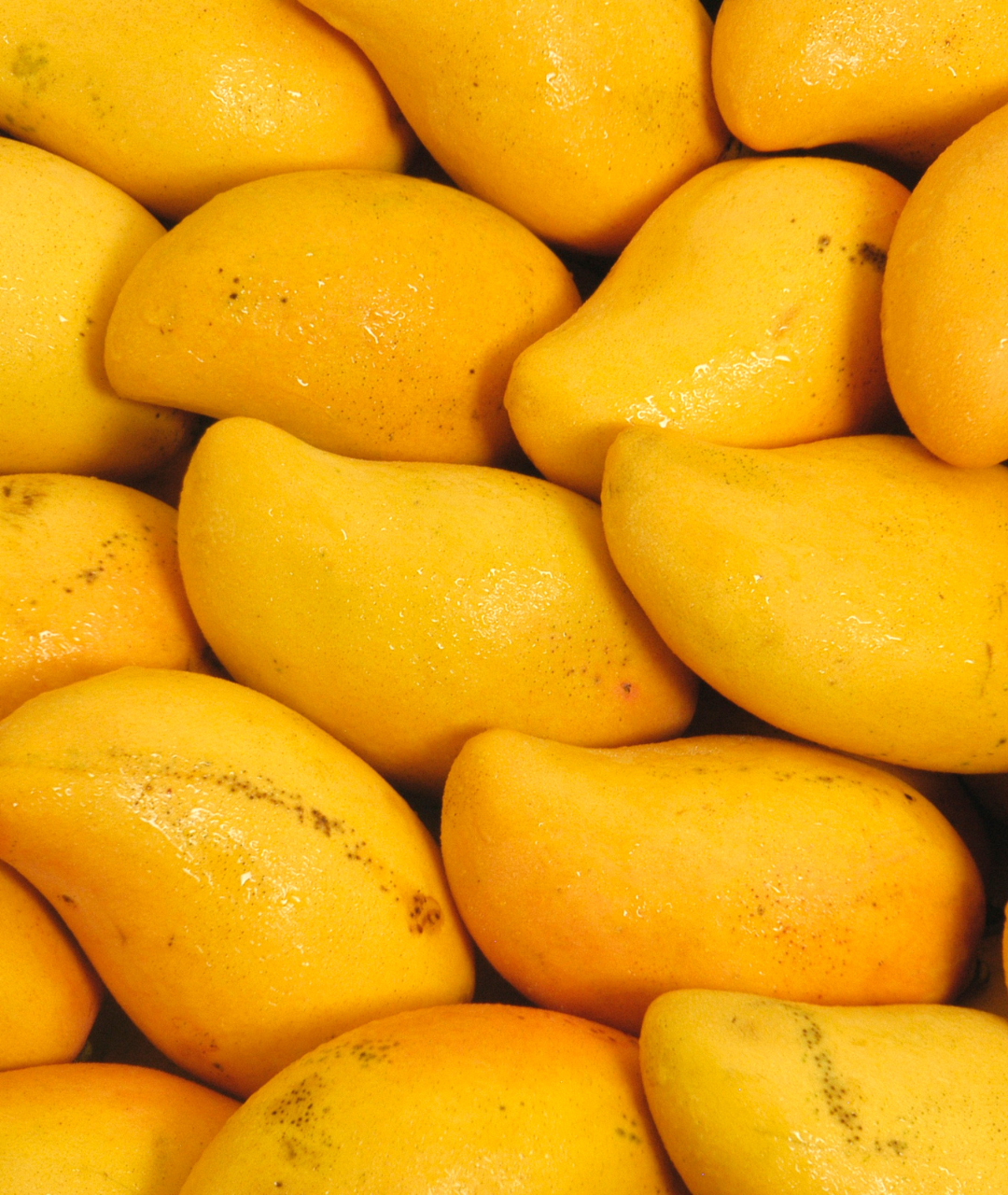
Mangoes in Sri Lanka are wonderfully sweet, juicy and full of flavour. Depending on the variety, the flesh can be soft and almost creamy, while other mangoes are firmer or slightly more fibrous. The sweetness, acidity, colour and aroma can vary quite a lot, which is exactly why it's worth trying more than just one variety during your trip.
I still remember eating my first really ripe mango here. The flesh was such a beautiful, deep orange colour, and the flavour was so much more intense than what I was used to from Switzerland. I genuinely thought I knew mangoes, but apparently I had been missing out.
Different mango varieties in Sri Lanka
Sri Lanka grows several mango varieties, including Karthacolomban, Willard and Vellaicolomban. They differ in size, colour, texture and flavour. Karthacolomban, for example, is one of the popular local varieties, known for its beautiful golden-yellow to orange flesh and wonderfully juicy texture when fully ripe.
You'll also notice that mangoes aren't only eaten when they're sweet and soft. Unripe green mangoes are popular too, especially with a little salt and chilli. They're crunchy, sour and make a surprisingly delicious snack. Mangoes are also used in cooking, for example in sweet and sour preparations or spicy mango curries.
When is mango season in Sri Lanka?
Mangoes are available over an extended period depending on the variety and region. The main harvest season generally falls between April and July, although other harvest periods are possible. As with many fruits in Sri Lanka, availability can vary depending on rainfall, weather conditions and the growing region.
That's why our fruit season calendar at the end of this article should be seen as a general guide rather than an exact schedule. Nature doesn't always follow a calendar.
Banana
English: Banana
German: Banane
Sinhala: කෙසෙල් (Kesel)
Tamil: வாழைப்பழம் (Vāḻaippaḻam)
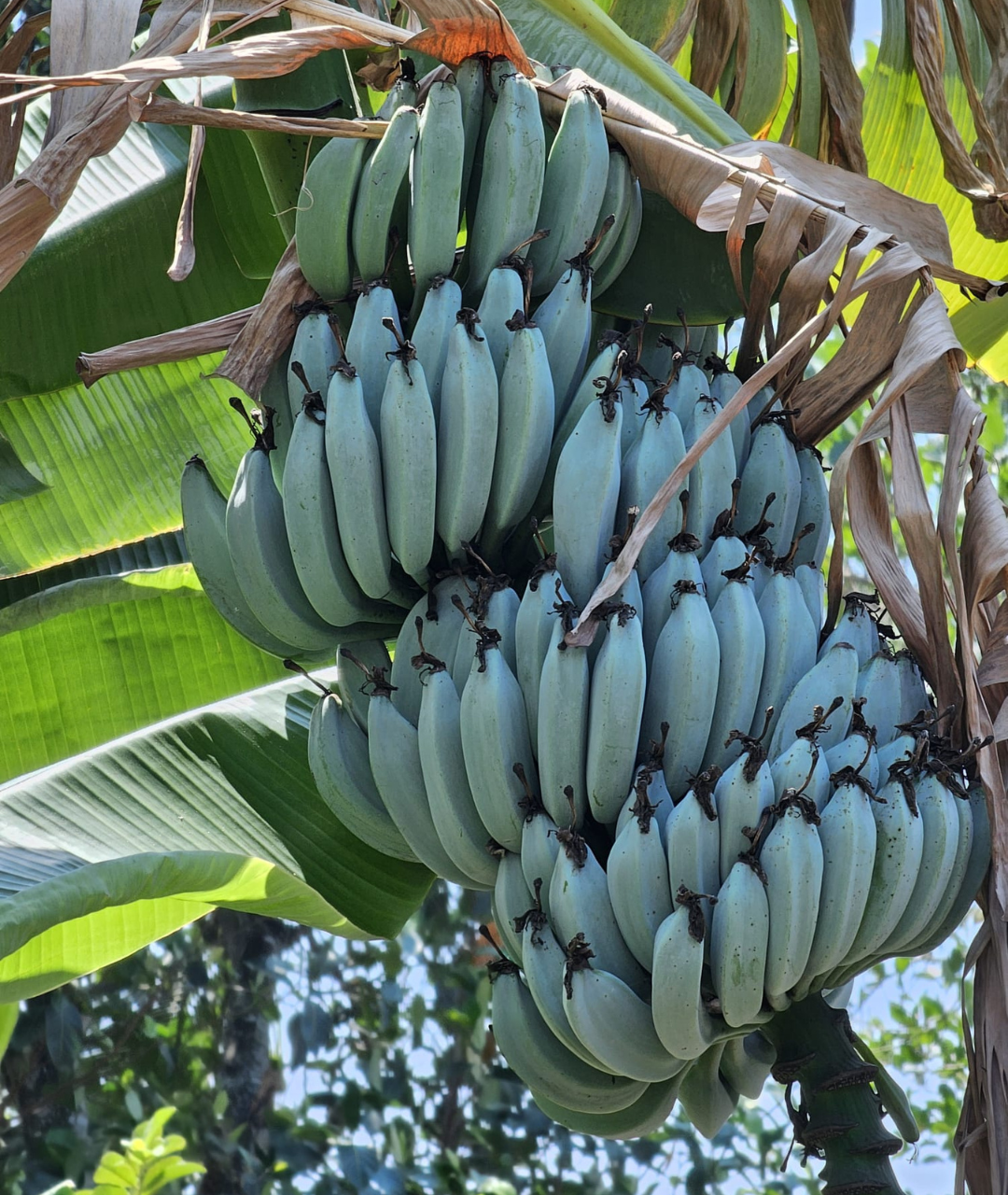
If you've always thought of bananas as simply yellow or green, things are about to get a little more interesting in Sri Lanka. There are so many different banana varieties here, and they don't just differ in size and colour. Their flavours and textures can be surprisingly different too.
Bananas are among the fruits you'll find practically everywhere in Sri Lanka. At markets and roadside fruit stalls, you'll often see several varieties hanging next to each other. Small ones, large ones, thick ones, thin ones, yellow ones, greenish ones and even reddish ones. And believe me, they're not all going to taste the same.
What do bananas taste like in Sri Lanka?
That really depends on which variety you choose. Some bananas are incredibly sweet and soft, while others are firmer, creamier or have a slightly sour note. That's why it's worth trying different varieties instead of always choosing the same banana.
Some of the best-known banana varieties in Sri Lanka include:
Ambul Kesel: One of the banana varieties you'll see very frequently in Sri Lanka. The bananas are usually small to medium-sized and have a sweet flavour with a slightly sour note. That's also where the name comes from, because "Ambul" means sour in Sinhala.
Seeni Kesel: If you love sweet bananas, you should definitely try Seeni Kesel. "Seeni" means sugar, and the name fits perfectly. These bananas are generally small, sweet and pleasantly soft.
Kolikuttu: Another popular banana variety in Sri Lanka. It's usually a little larger and fuller than Seeni Kesel, with sweet, aromatic and rather creamy flesh. It's also often one of the slightly more expensive banana varieties.
Anamalu: You can recognise Anamalu by its elongated shape. The flesh is soft and creamy, and the flavour is generally mild and sweet.
Rath Kesel: And yes, Sri Lanka even has red bananas! Rath Kesel immediately stands out because of its reddish to dark red skin. The flesh is creamy and sweet, with a flavour that's a little different from the classic yellow bananas.
And these are just a few of the varieties you'll find here. Of course, you don't have to remember all their names. The best thing to do is what we do: simply try your way through them.
Bananas aren't only eaten as fruit
In Sri Lanka, bananas are much more than something you peel and eat. Different types of bananas are also used for cooking. Cooking bananas, for example, are prepared in curries, and even the banana flower is used in Sri Lankan cuisine. Known as Kesel Muwa in Sinhala, banana blossom is prepared in several traditional dishes.
Something else I noticed pretty quickly is how often bananas are served after a meal. You finish a big plate of rice and curry, thinking you're completely full, and then someone brings out the bananas. So don't be surprised if you're invited to eat with a Sri Lankan family and bananas appear on the table after lunch or dinner. They're often enjoyed as a little sweet ending to the meal.
When is banana season in Sri Lanka?
The great thing about bananas is that you can find them practically all year round. However, which varieties are available and how much they cost can change depending on the harvest, region, demand and weather conditions. A banana variety that's cheap today might cost considerably more a few weeks later.
Pineapple
English: Pineapple
German: Ananas
Sinhala: අන්නාසි (Annasi)
Tamil: அன்னாசிப்பழம் (Annasipazham)
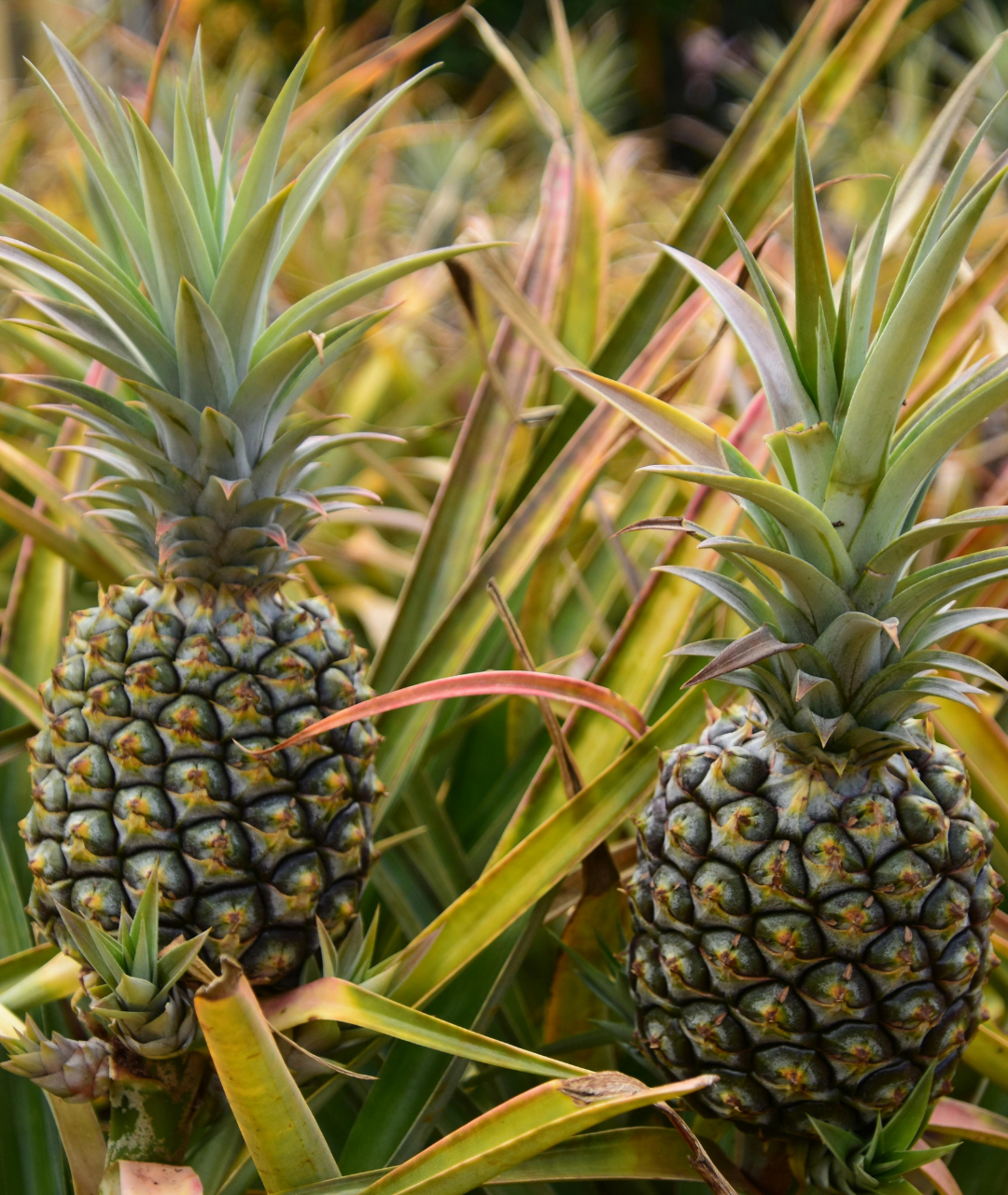
Pineapple is another fruit you probably already know very well, but it's definitely worth trying again in Sri Lanka. A perfectly ripe pineapple here can taste so much more intense than what you might be used to from European supermarkets.
What does pineapple taste like in Sri Lanka?
A ripe pineapple is wonderfully juicy, sweet and slightly tangy. Different pineapple varieties are grown in Sri Lanka, with Mauritius and Kew being among the best known. Mauritius is particularly popular for eating fresh and is appreciated for its sweet flavour.
And if plain pineapple sounds a little boring, try it with some salt and chilli. The combination of sweet, sour, salty and spicy is popular here and definitely worth trying. Pineapple isn't only eaten as a snack either. We also love having it with lunch, alongside rice and curry. It's often served with dishes like biryani too, sometimes as a fruity garnish. The sweetness and slight acidity of pineapple go surprisingly well with spicy food.
My little tip for fresh pineapple juice
If you're making fresh pineapple juice yourself, you really don't need much. Simply put fresh pineapple into a blender and blend until smooth. As you blend it, a wonderfully light and fluffy pineapple foam forms on top. For me, that's almost the best part of the whole juice.
When is pineapple season in Sri Lanka?
Pineapples are generally available throughout the year in Sri Lanka. However, supply can vary depending on the growing region, harvest and weather conditions.
Papaya
English: Papaya / Papaw
German: Papaya
Sinhala: පැපොල් (Papol)
Tamil: பப்பாளி (Pappāḷi)
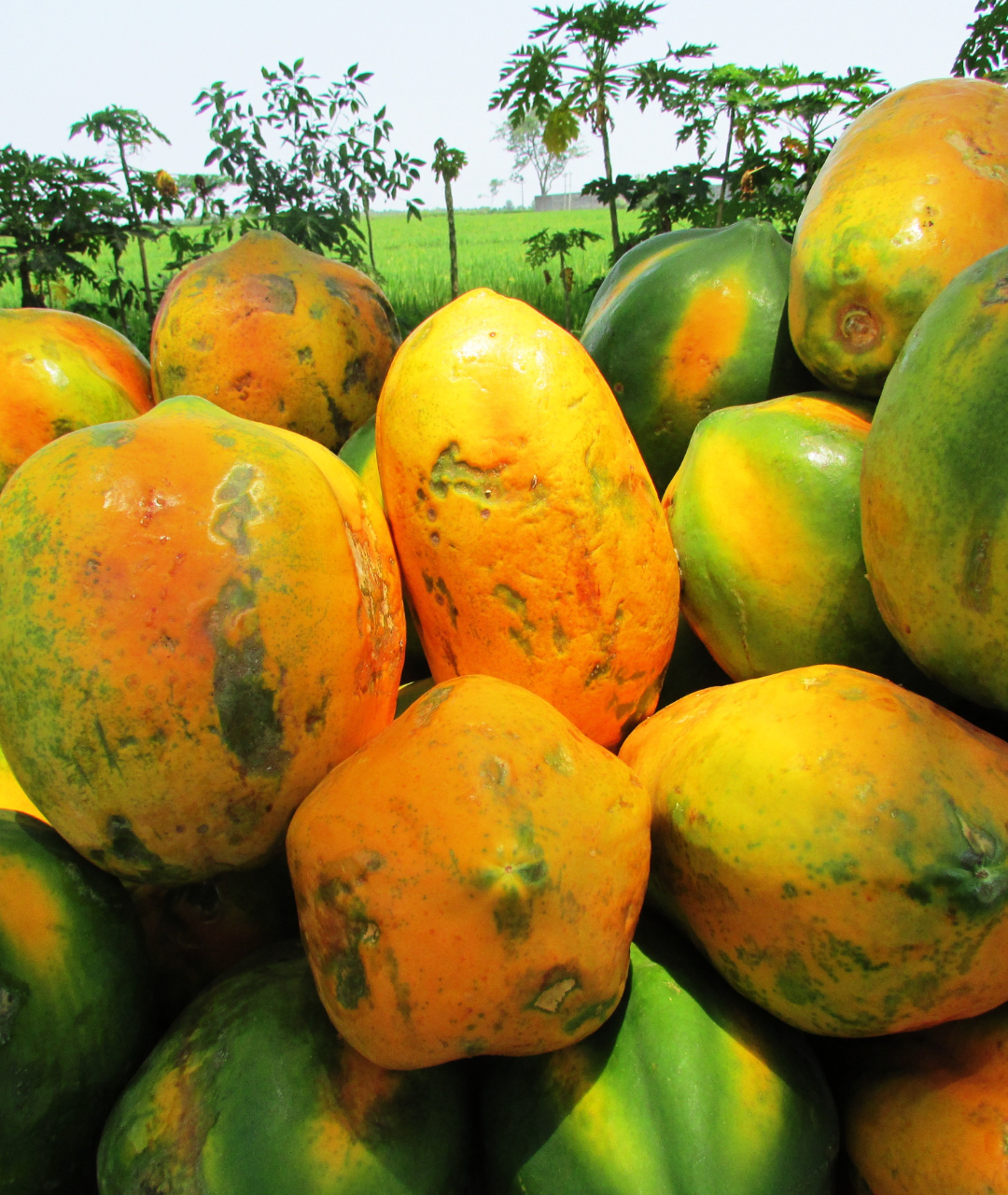
Papaya is another fruit that's almost impossible to miss in Sri Lanka. You'll find it at markets, roadside fruit stalls, supermarkets and, of course, on breakfast plates in hotels and restaurants. It's one of those fruits that simply seems to be everywhere.
What does papaya taste like in Sri Lanka?
Papaya is definitely a matter of taste. A ripe papaya has soft, juicy flesh and a mild, sweet flavour. Depending on the variety, the flesh can range from yellowish-orange to a deep orange or reddish colour. If you've never been a big fan of papaya, it's still worth giving it another try here. Just like mangoes and pineapples, there's a difference between fruit that's travelled a long distance and fruit that's eaten where it grows and can ripen properly.
Papaya is also very popular as a fresh juice in Sri Lanka. The ripe fruit is blended into a wonderfully creamy drink, which you'll often find on menus simply as Papaya Juice.
My personal papaya tip
And here's a little personal tip from me. Whenever my digestion slows down a bit, I drink a large glass of fresh papaya juice first thing in the morning on an empty stomach. For me personally, it works surprisingly well, and usually it doesn't take very long before my stomach starts making itself known.
Papaya contains fibre and the enzyme papain and is often associated with digestion. Of course, everyone's body reacts differently, but if you're travelling and struggling with constipation, you might want to give it a try.
Papaya is also eaten unripe
Papaya doesn't always have to be orange, soft and sweet. Unripe green papaya is also used in Sri Lankan cooking. It's much firmer and doesn't yet have the typical sweet flavour of ripe papaya, making it suitable for various cooked dishes. So once again, you get to discover two very different sides of the same fruit.
When is papaya season in Sri Lanka?
Papayas are grown throughout the year in Sri Lanka and are usually easy to find. However, supply, quality and prices can still vary depending on the weather, region and harvest.
King Coconut
English: King Coconut
German: Königskokosnuss
Sinhala: තැඹිලි (Thambili)
Tamil: செவ்விளநீர் (Sevvila Neer)
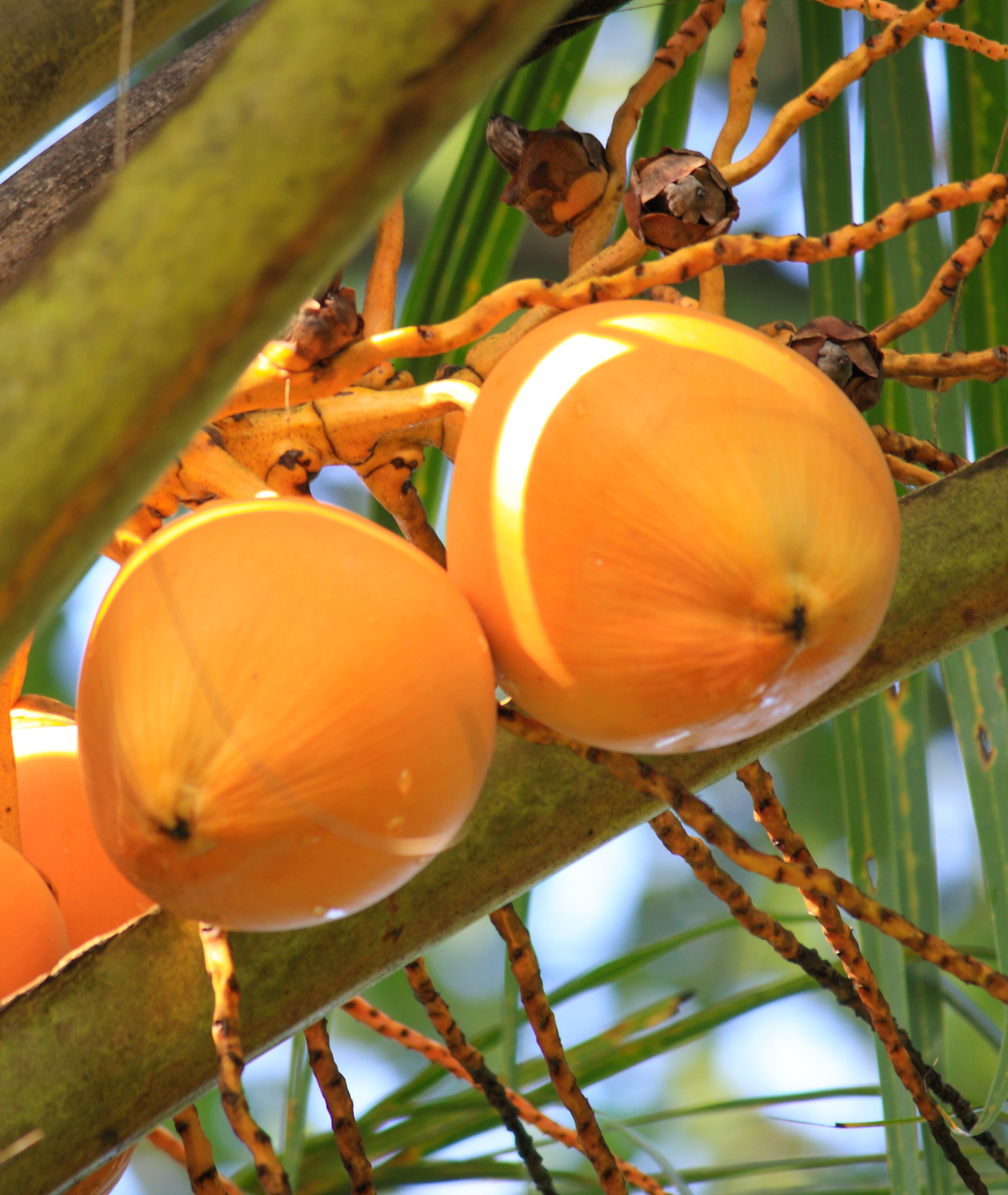
If you're travelling around Sri Lanka, you'll have a hard time missing these. Bright orange king coconuts are hanging at little roadside stalls, outside shops and sometimes right next to the road. In Sinhala, king coconut is called Thambili, and for me, it's simply part of Sri Lanka.
What's the difference between king coconut and regular coconut?
Although they look similar, king coconut isn't simply an orange version of a regular coconut. King coconuts are mainly enjoyed for their coconut water. Inside, you'll find plenty of liquid and, in younger fruits, a thin layer of soft flesh.
Regular coconuts, on the other hand, are mainly used for their flesh. That's what coconut milk and freshly grated coconut are made from, both of which are essential ingredients in Sri Lankan cooking.
What does king coconut taste like?
The water is slightly sweet, refreshing and has a mild coconut flavour. Especially on a hot day, there's hardly anything better than a fresh Thambili. You'll often find them right by the roadside, where the seller opens the coconut in front of you, adds a straw, and you're ready to drink.
Thambili isn't just incredibly refreshing. It also provides fluids and naturally occurring electrolytes such as potassium. In Sri Lanka's hot and humid climate, that's especially welcome. If you've been exploring all day, sweating a lot or simply need something refreshing, a fresh Thambili is a lovely natural alternative to a sugary soft drink.
Coconut water is mostly water, contains natural electrolytes and is relatively low in calories. Of course, it's not a miracle drink, but on a hot day in Sri Lanka, it can certainly feel like one.
And here's another little tip. Once you've finished drinking your Thambili, don't throw it away just yet. Ask the seller to cut it open. Depending on how mature it is, you might find a thin layer of soft, almost jelly-like flesh inside that you can scoop out and eat.
When is king coconut season in Sri Lanka?
King coconuts are available practically all year round in Sri Lanka. As with other fruits, prices and availability can vary depending on the region, weather and harvest.
Coconut
English: Coconut
German: Kokosnuss
Sinhala: පොල් (Pol)
Tamil: தேங்காய் (Thengai)
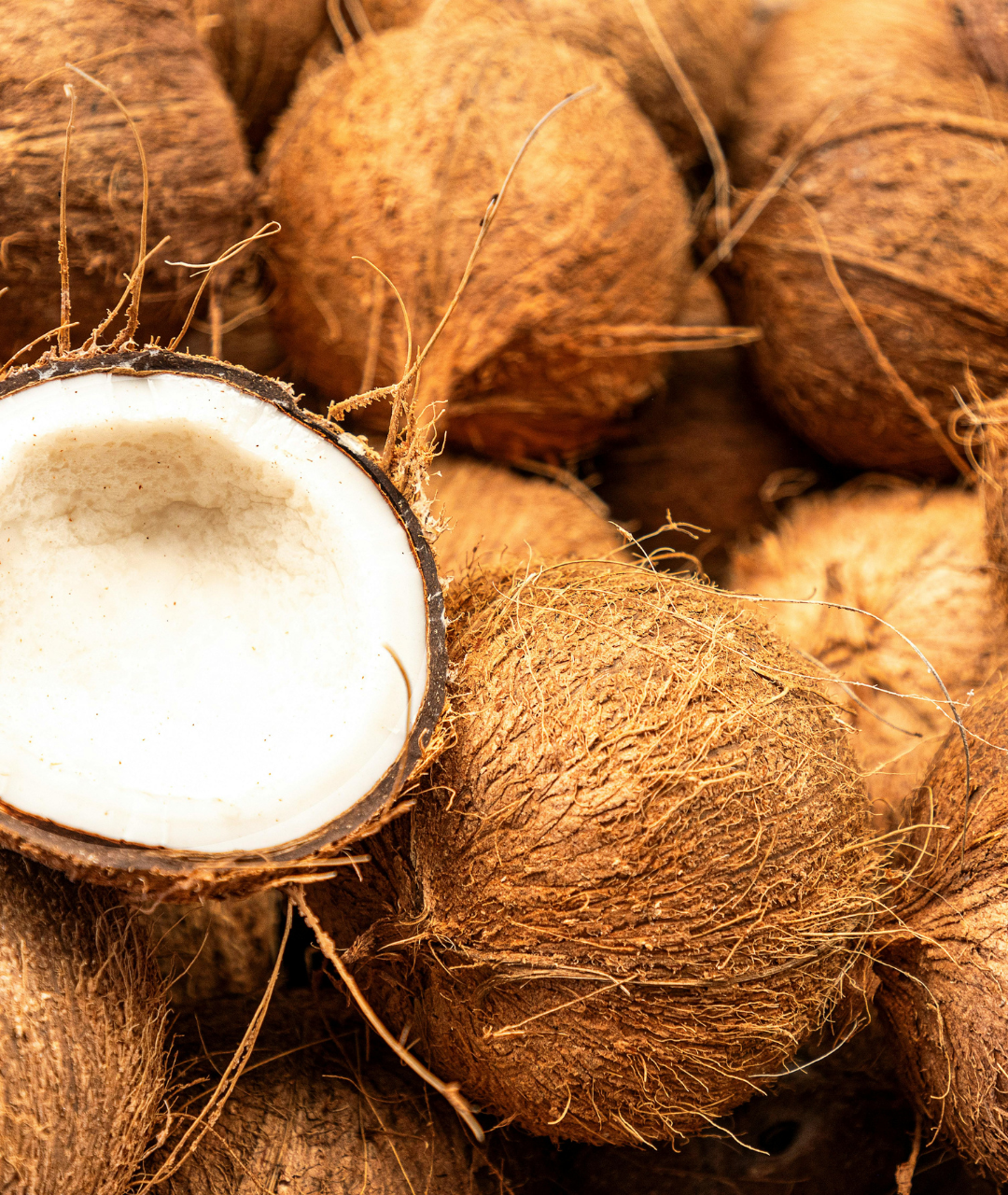
If there's one ingredient that's almost impossible to imagine Sri Lankan cooking without, it's coconut. While king coconut is mainly enjoyed as a drink, regular coconut appears in countless Sri Lankan dishes and is an essential part of everyday life.
Coconut is simply part of everyday life in Sri Lanka
Freshly grated coconut, coconut milk and coconut oil are used every day. Especially when eating rice and curry, you'll quickly notice how important coconut is in Sri Lankan cuisine. Freshly grated coconut, for example, is used to make Pol Sambol, one of Sri Lanka's most famous sambols. It's prepared with ingredients such as chilli, onions and lime.
Coconut milk is also used in many curries. It creates that wonderfully creamy texture while balancing the heat of the spices. And then there's Pol Roti, where freshly grated coconut is mixed directly into the dough.
So you'll quickly realise that a coconut here isn't just another fruit hanging from a palm tree. It's an essential part of everyday life and, above all, the food.
Young or mature coconut makes a difference
The ripeness of a regular coconut also makes a difference. Young coconuts contain more liquid and softer flesh. As they mature, the white flesh becomes thicker and firmer. It's this firm white flesh that's grated or pressed to make coconut milk.
If you ever get the chance to watch someone freshly grate coconut and then squeeze out the milk by hand, you'll understand why fresh coconut milk tastes so different from the canned version.
When is king coconut season in Sri Lanka?
Coconuts are harvested throughout the year in Sri Lanka. They're one of those ingredients you'll find practically everywhere, from markets and small shops to supermarkets.
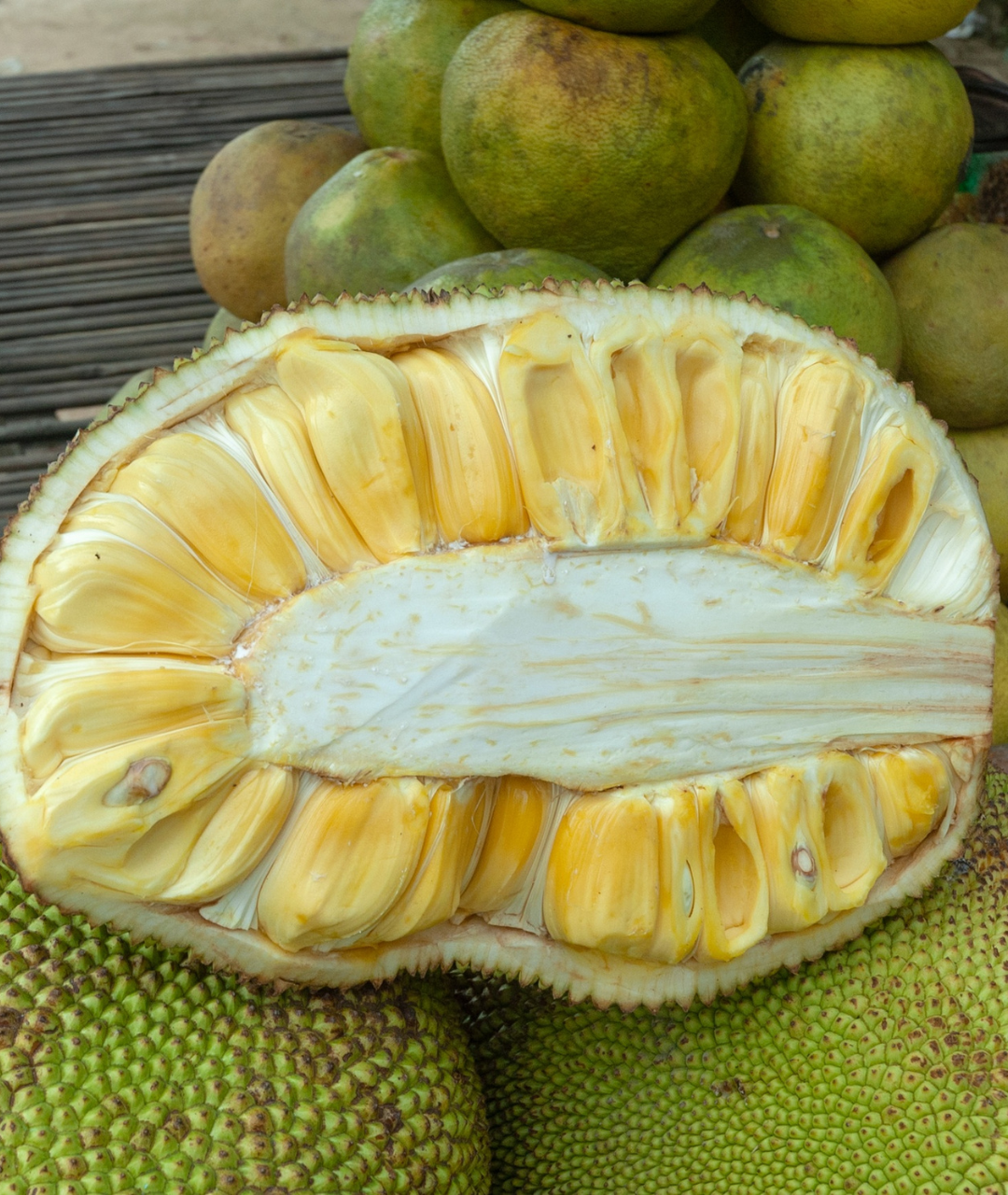
Jackfruit
English: Jackfruit
German: Jackfruit
Sinhala: කොස් (Kos)
Tamil: பலாப்பழம் (Palāppaḻam)
Now we're getting to one of my absolute favourite fruits. I love jackfruit, and I really mean in every possible variation. If you're vegan, jackfruit is pretty much a dream come true. You might already know it as a meat alternative from Europe, but here in Sri Lanka, you really get to discover just how incredibly versatile this giant fruit is.
Depending on how ripe it is, its flavour and texture change completely. It's used in curries, cooked as part of a meal, eaten ripe as a sweet fruit, and even the seeds end up on the plate.
Polos, Kos and Waraka
In Sri Lanka, jackfruit is used at different stages of ripeness, resulting in completely different dishes.
Polos is young, unripe jackfruit. It's cooked and especially popular as a curry. Polos Curry is savoury, full of spices, and the jackfruit absorbs all those wonderful flavours. If you know jackfruit from Europe as a vegan meat alternative, this is probably the version you're most familiar with.
As the jackfruit matures, it's used as Kos. The flesh is cooked and can be eaten with coconut and other side dishes. At this stage, jackfruit isn't just a fruit. It can be a proper part of a meal.
And then comes my personal favourite: Waraka.
Ripe jackfruit, my absolute favourite
When jackfruit is fully ripe, it changes completely. The flesh turns yellow, becomes soft and sweet, and develops an intense tropical flavour. Fresh Waraka after a plate of rice and curry? That makes my heart happy.
You simply eat the individual pieces with your fingers. Inside each piece is a large seed, and whatever you do, don't throw those seeds away.
Even the seeds are eaten
For me, this is one of the best examples of how much you can use from a single fruit. Whenever we eat fresh jackfruit, we simply put the seeds aside. Salman's aunt roasts them afterwards, and I look forward to those almost as much as the jackfruit itself.
Once roasted, the seeds develop a completely different texture and a slightly nutty flavour. They actually remind me a little of roasted chestnuts, or Marroni as we call them in Switzerland. In Sri Lanka, the seeds aren't only roasted. They're also boiled and used in various dishes and curries.
So one giant jackfruit can turn into completely different meals. From spicy Polos Curry to cooked jackfruit, sweet Waraka and finally even the seeds.
A visit to the market is worth it
If you get the chance, visit a local market and look out for jackfruit. I find it especially fascinating to watch how these enormous fruits are opened and cut into different parts right there at the market. That's when you really see just how much is inside a jackfruit and how the different parts are removed and prepared.
Jackfruit also contains a very sticky, milky sap, so if you're planning to cut open a whole jackfruit yourself, be prepared for that.
What does jackfruit taste like?
That's almost impossible to answer with just one description. Young jackfruit is mild and absorbs the spices of a curry beautifully. Cooked jackfruit is filling and has a completely different texture, while ripe Waraka is sweet, soft, aromatic and intensely fruity. And the roasted seeds have a slightly nutty flavour that personally reminds me of chestnuts.
So with just one jackfruit, you're actually getting several completely different flavour experiences.
When is jackfruit season in Sri Lanka?
Jackfruit is available over an extended period in Sri Lanka. The main season can vary depending on the region, rainfall and weather conditions. And because the fruit is used at different stages of ripeness, you might come across it at different times and in very different forms.
Rambutan
English: Rambutan
German: Rambutan
Sinhala: රඹුටන් (Rambutan)
Tamil: ரம்புட்டான் (Rambuttan)
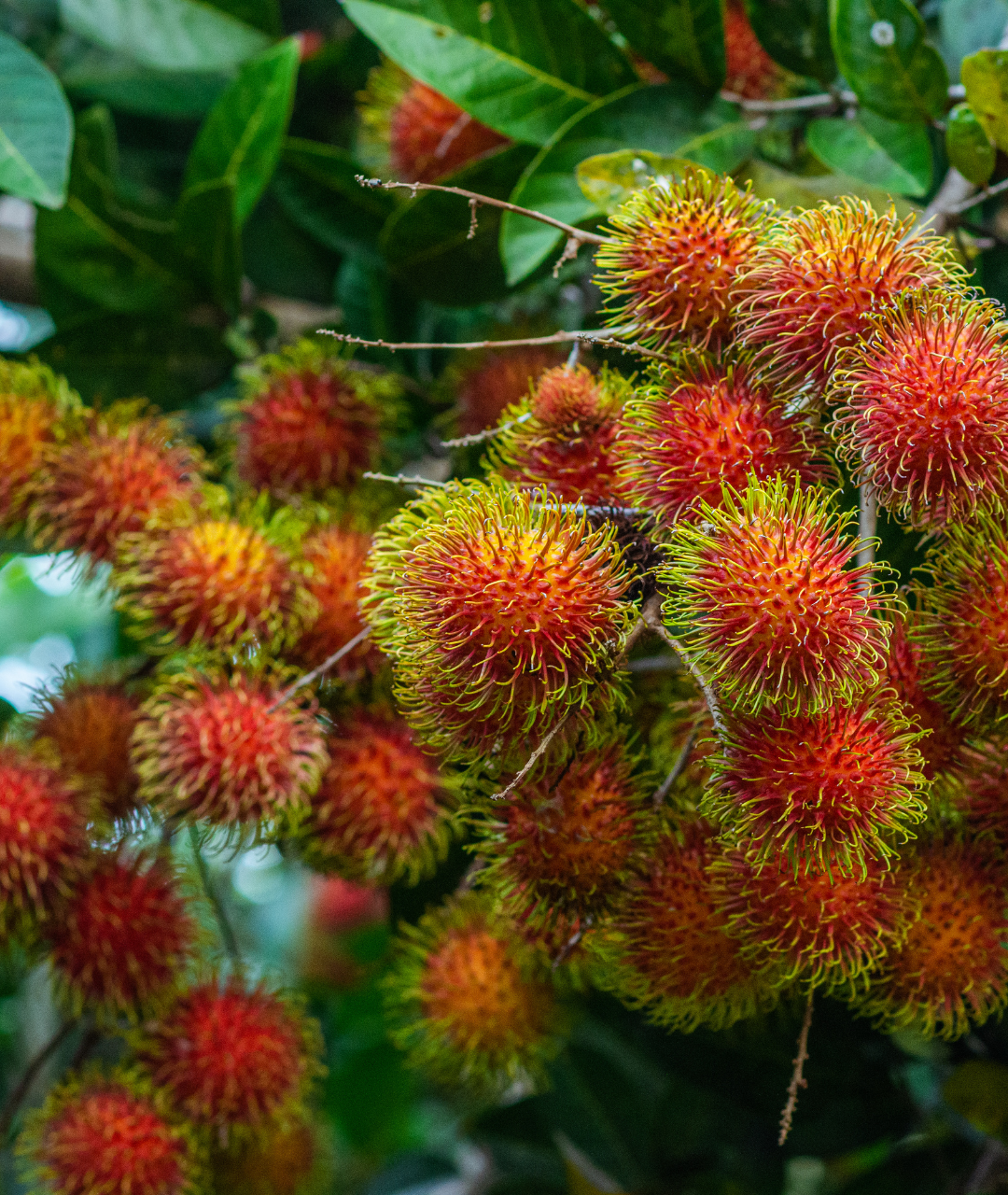
When rambutan season arrives in Sri Lanka, it's pretty hard to miss. Suddenly, these little red fruits seem to be everywhere, at roadside stalls and local markets. Just looking at them, rambutan is probably one of those fruits that seems a little unusual to many travellers.
The red to reddish-yellow skin is covered in soft, hair-like spikes. But don't worry, they're completely harmless.
How dou you eat rambutan?
You simply open the skin, and underneath you'll find white to slightly translucent flesh. There's a seed in the middle, surrounded by the juicy flesh, which you don't eat.
When rambutans are nicely ripe, the skin is usually easy to open with your fingers, so you don't even need a knife.
What does rambutan taste like?
Rambutan is sweet, juicy and slightly floral. Both the texture and flavour remind me a little of lychee, although rambutan definitely has its own taste. If you like lychees, you should absolutely try rambutan in Sri Lanka.
There are different rambutan varieties too, so you'll find fruits in different colours and sizes. Some are bright red, others more yellowish or orange. The sweetness can vary, and so can how easily the flesh separates from the seed.
When is rambutan season in Sri Lanka?
In many growing regions, the main season is roughly between June and August. However, depending on the region, rambutan can also be harvested at other times.
So once again, our fruit season calendar is just a general guide. But if you're in Sri Lanka during rambutan season, you'll probably notice pretty quickly. The fruits suddenly seem to pop up everywhere.
Mangosteen
English: Mangosteen
German: Mangostan
Sinhala: මැංගුස් (Mangus)
Tamil: மங்குஸ்தான் (Mangustān)
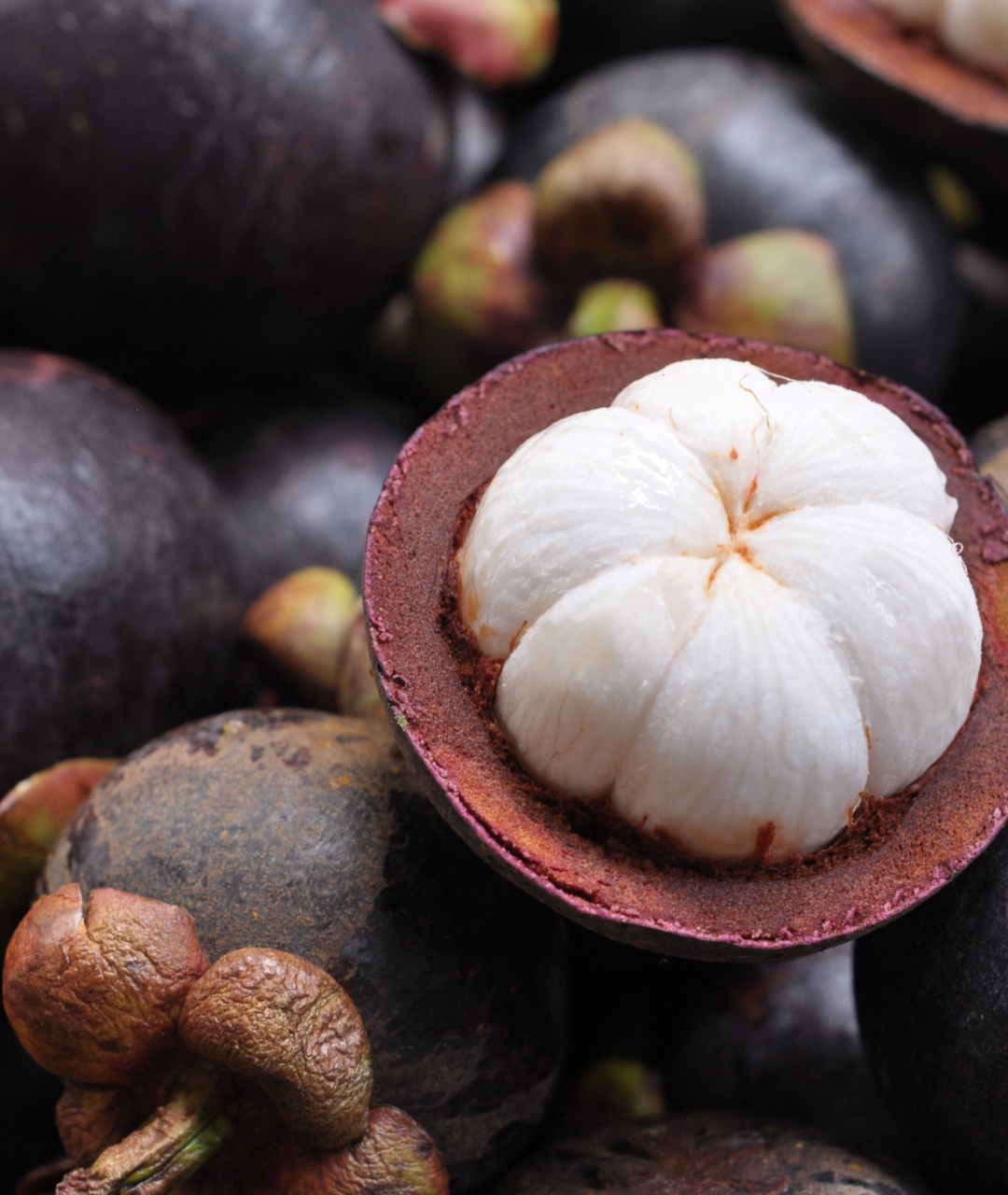
Dark purple and rather unremarkable on the outside, snow-white and divided into little segments on the inside. Mangosteen is definitely one of those fruits you should try if you're in Sri Lanka during the season.
And no, despite the name, mangosteen has absolutely nothing to do with mango when it comes to flavour.
How do you eat mangosteen?
You open the thick purple skin, and inside you'll find several white fruit segments. Some of the segments may contain a seed. You eat the white flesh, but not the thick outer skin.
Be a little careful when opening it, though. The dark purple juice from the skin can stain quite badly.
What does mangosteen taste like?
Mangosteen is sweet, slightly tangy, juicy and incredibly aromatic. The texture is soft and delicate, and it's actually quite difficult to compare the flavour to a European fruit. That's exactly why I'd recommend simply trying it yourself.
There's also a little detail I find fascinating. Take a closer look at the bottom of a mangosteen and you'll notice a small flower-like shape. The number of little sections gives you an idea of how many fruit segments you'll find inside. It's a tiny detail, but one I find pretty interesting once you know about it.
When is mangosteen season in Sri Lanka?
Mangosteen is much more seasonal than fruits like bananas or papayas. The main season is roughly between May and September, although exact availability varies depending on the region and weather.
So if you spot mangosteen at a roadside stall, I wouldn't necessarily think, "I'll try that another day." Depending on when you're travelling, it might not be there later.
Durian
English: Durian
German: Durian / Stinkfrucht
Sinhala: දූරියන් (Durian)
Tamil: துரியன் (Durian)
Now let's talk about a fruit that really divides opinions. Durian. Either you love it, or you wonder why on earth anyone would voluntarily eat something that smells like that.
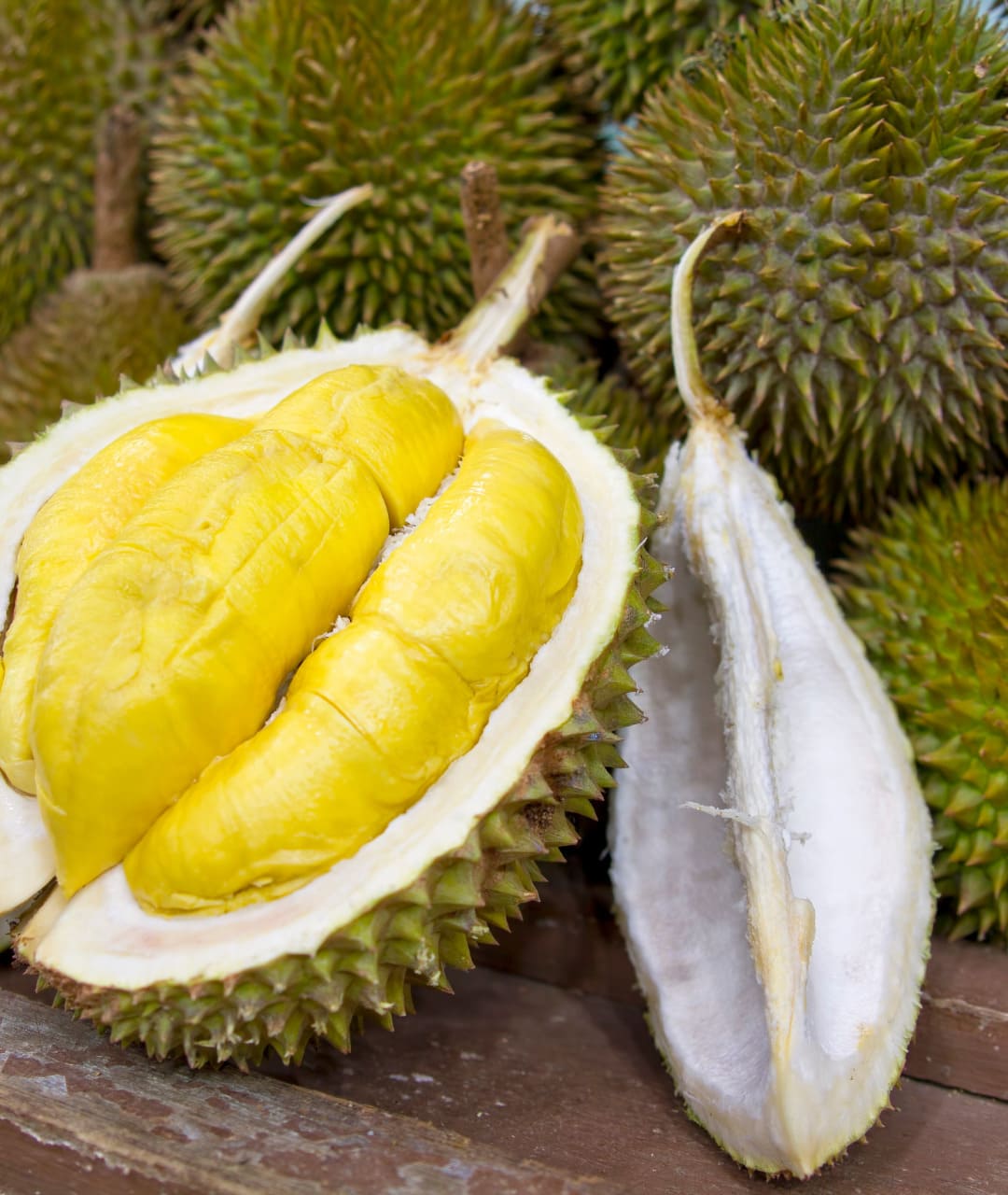
Durian isn't called the "stinky fruit" for nothing. When it's ripe, it has an incredibly strong smell, and when I say strong, I really mean strong. But don't let the smell put you off immediately, because the flavour is a completely different story.
What does durian taste like?
The flesh is soft, thick and incredibly creamy, almost like a very rich custard or pudding. The flavour is difficult to describe. It's sweet and creamy, but it also has a very distinctive aroma that's almost impossible to compare with any other fruit.
And that's probably what makes durian one of those fruits you really have to try yourself before deciding which side you're on.
How do you eat durian?
The large, spiky shell is opened, revealing several sections filled with soft flesh. Each piece contains a large seed that shouldn't be eaten raw.
If you're trying durian for the first time, I wouldn't recommend buying a whole fruit straight away. During the season, some markets and fruit stalls sell already opened durians or individual pieces. That way, you can start with a small taste and see what you think.
Why isn't durian allowed everywhere?
You might notice signs in some parts of Asia saying that durian isn't allowed inside hotels, public transport or other indoor spaces. The reason isn't the fruit itself, but its intense smell, which can linger in enclosed spaces for quite a while.
So if you buy durian, I'd recommend eating it outside rather than taking it back to your hotel room.
When is durian season in Sri Lanka?
Durian is a seasonal fruit in Sri Lanka and isn't equally available throughout the year. The main season is roughly between June and August, although it can shift depending on the growing region, rainfall and weather.
During the season, you'll find these large, spiky fruits mainly at markets and fruit stalls. And even if you don't see them straight away, there's a good chance you'll smell them first.
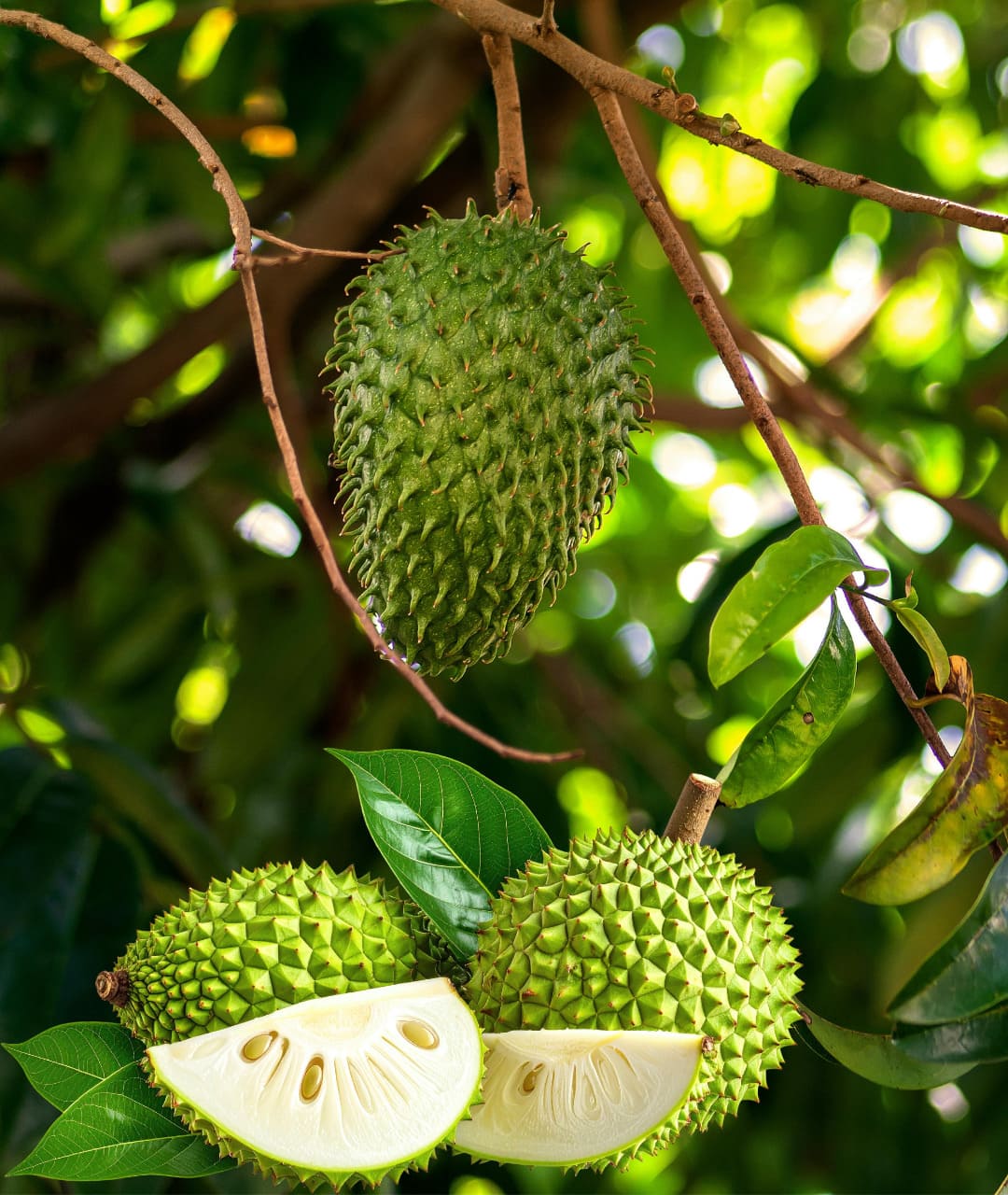
Soursop
English: Soursop
German: Stachelannone / Sauersack
Sinhala: කටු අනෝදා (Katu Anoda)
Tamil: முள் சீத்தாப்பழம் (Mul Seetha Pazham)
Soursop is one of those fruits many travellers discover for the first time in Sri Lanka. On the outside, it's green, relatively large and covered in soft spikes. Inside, however, you'll find white, soft and very juicy flesh.
In Sinhala, the fruit is called Katu Anoda. "Katu" refers to something spiky or thorny, and once you've seen the fruit, the name makes perfect sense.
What does soursop taste like?
Soursop is sweet and pleasantly tangy at the same time. The flesh is soft, juicy and sometimes almost creamy. It's difficult to compare the flavour to just one other fruit. Depending on how ripe it is, it can remind you of a mixture of different tropical fruits with a refreshing sour note.
Inside the flesh are several large black seeds, which should be removed and not eaten.
Soursop Juice
One way to try soursop is as a fresh juice. Soursop Juice is creamier than many other fruit juices and has a refreshing combination of sweetness and acidity. You'll find it on some drink menus in Sri Lanka, and it's definitely an interesting fruit to try.
You can also eat soursop fresh by opening the ripe fruit and removing the soft flesh. Personally, though, I have to admit that soursop isn't really one of my favourites. The flavour is interesting, but the texture is just a little too mushy for my liking.
When is soursop season in Sri Lanka?
Soursop can be available over extended periods of the year. How often you'll find it at markets and fruit stalls depends on the region, harvest and weather. So if you spot a nice ripe one and want to try it, it's probably worth taking the opportunity rather than assuming you'll find it again on your next market visit.
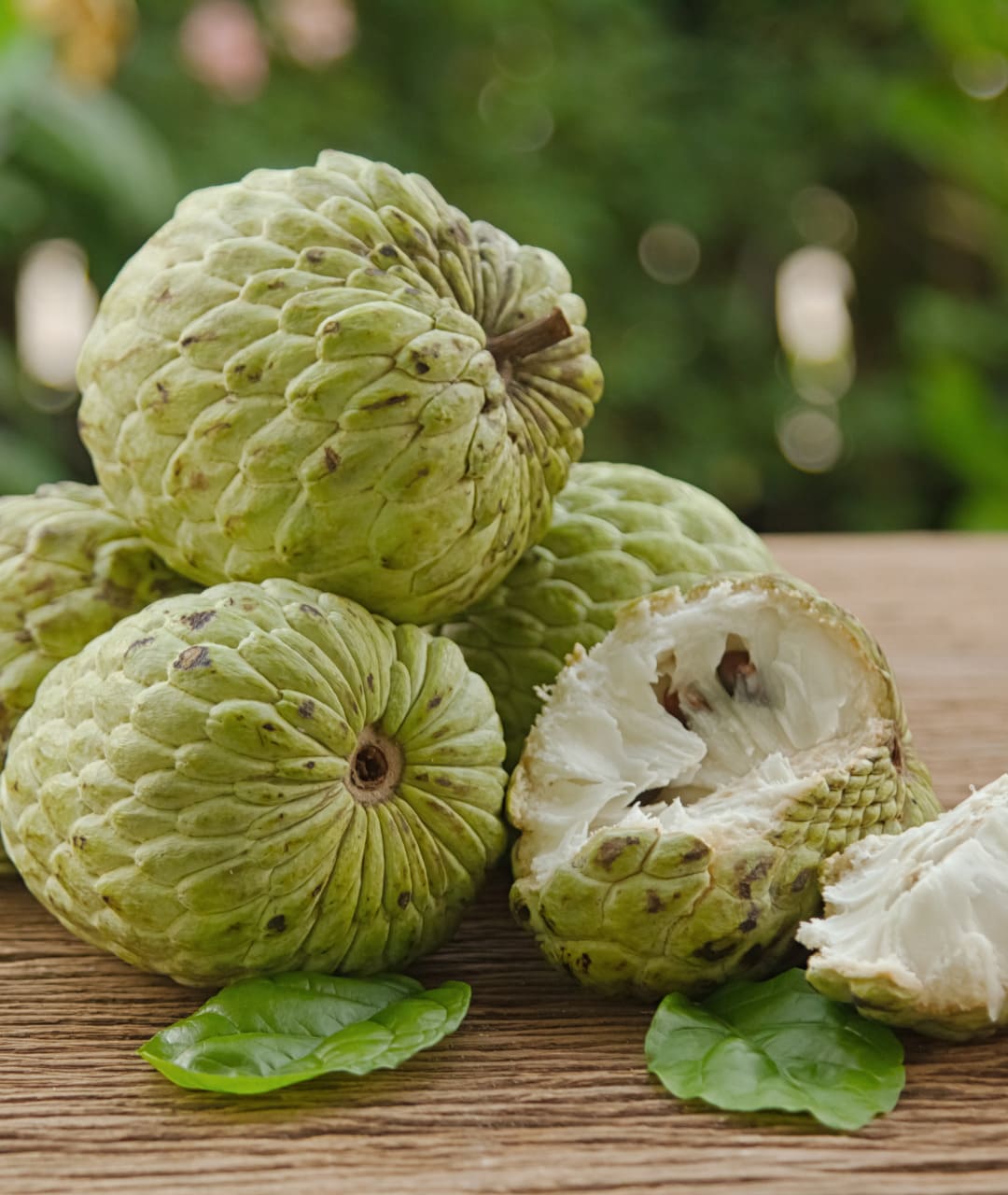
Sugar Apple
English: Sugar Apple / Sweetsop
German: Zimtapfel / Rahmapfel
Sinhala: සීනි අනෝදා (Seeni Anoda)
Tamil: சீத்தாப்பழம் (Seetha Pazham)
And then there's Seeni Anoda. If you already know a little Sinhala, the name gives you a pretty good idea of what to expect. "Seeni" means sugar.
Unlike the spiky Katu Anoda, sugar apple is smaller and has a green skin that looks as though it's made up of lots of little rounded segments. When ripe, it becomes soft and is relatively easy to open.
What does sugar apple taste like?
The name really says it all. The pale flesh is very sweet, soft and creamy. The texture almost reminds me of custard, and when it comes to flavour, it's definitely one of Sri Lanka's sweeter fruits.
You can simply open the fruit and eat the flesh straight from the skin. You'll need a little patience, though, because there are quite a lot of dark seeds hidden inside, which shouldn't be eaten.
Katu Anoda or Seeni Anoda?
The two names can be a little confusing at first, so here's an easy way to remember the difference. Katu Anoda is the larger soursop with soft spikes and a sweet and sour flavour, while Seeni Anoda is the smaller sugar apple with segmented skin and very sweet, creamy flesh.
If you find both, I'd actually recommend trying both. Although they're related, they taste quite different, and their textures aren't the same either.
My personal favourite is definitely Seeni Anoda. I don't particularly enjoy Katu Anoda because the texture is a little too mushy for me. But that's exactly what's so interesting about discovering all these fruits. You really have to try them yourself, because everyone has different tastes.
When is sugar apple season in Sri Lanka?
Sugar apples are grown in different regions of Sri Lanka and are seasonally available. The exact harvest period can vary depending on the region and weather.
Just like with soursop, if you find a beautifully ripe sugar apple at a market, it's a good opportunity to give it a try.
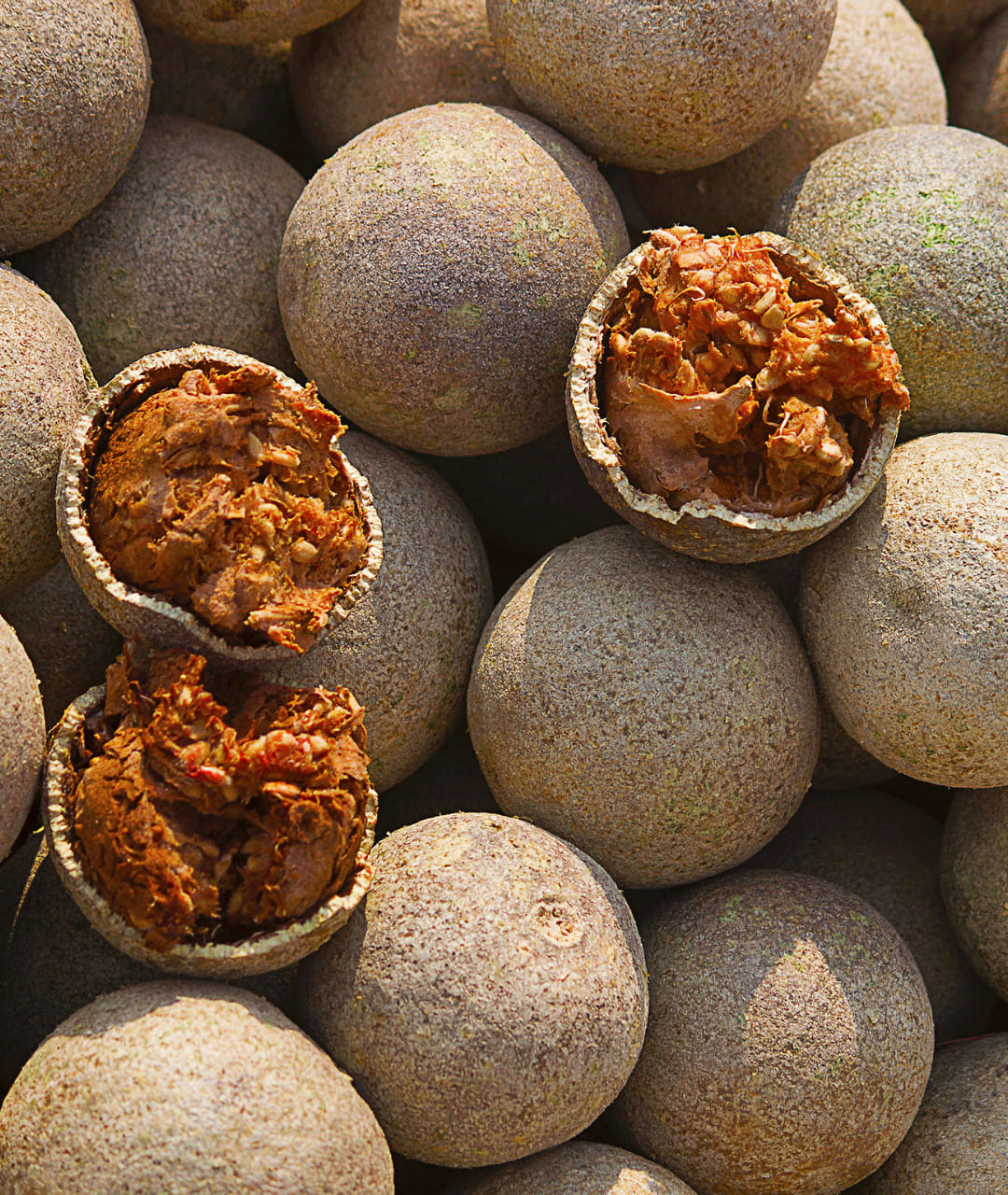
Wood Apple
English: Wood Apple
German: Holzapfel
Sinhala: දිවුල් (Divul)
Tamil: விளாம்பழம் (Vilampazham)
Wood apple is definitely one of those Sri Lankan fruits that might make you wonder what on earth you're supposed to do with it. From the outside, it looks a little like a large, greyish-brown ball. The shell is hard and woody and needs to be cracked open to reach the flesh inside.
And then comes the next surprise. The flesh is brown, thick and, let's just say, not necessarily something that makes you want to take a bite immediately.
What does wood apple taste like?
Wood apple has a very distinctive flavour. The flesh is sweet and sour, aromatic and quite intense, making it difficult to compare with other fruits. The texture is unusual too. The flesh is thick, sticky and contains lots of small seeds, which is why wood apple is often prepared as a drink rather than simply eaten fresh.
Wood apple juice
Now this is something I can definitely talk about from personal experience. Wood Apple Juice looks a little unusual at first. It's brown, and to be completely honest, I don't find the colour particularly appetising.
But of course, I tried it anyway. Once. And honestly, once was enough for me.
Salman absolutely loves Wood Apple Juice. Me? You could chase me away with it. I really don't like the taste at all.
But that's exactly why I still wanted to include it in this guide. Everyone has different tastes, and wood apple is one of those fruits you're unlikely to experience fresh in Europe. Maybe you'll try the juice and have absolutely no idea what my problem with it is.
How is wood apple juice made?
The flesh is removed from the hard shell and mixed with water. Depending on the recipe, sugar and sometimes other ingredients are added. The result is a rather thick drink with its typical brown colour and intense wood apple flavour.
So if you order Wood Apple Juice, don't expect a light, clear fruit juice. It's thick, rich and definitely has a taste of its own.
When is wood apple season in Sri Lanka?
Wood apple is seasonally available in Sri Lanka, with harvest times varying depending on the region and weather. Even when you don't see the fresh fruit everywhere, you might still come across wood apple in other forms. Divul is especially well known as a juice and in other processed products.
My conclusion, though, stays the same. You should definitely try it at least once. Whether you ever want to try it again is entirely up to you.
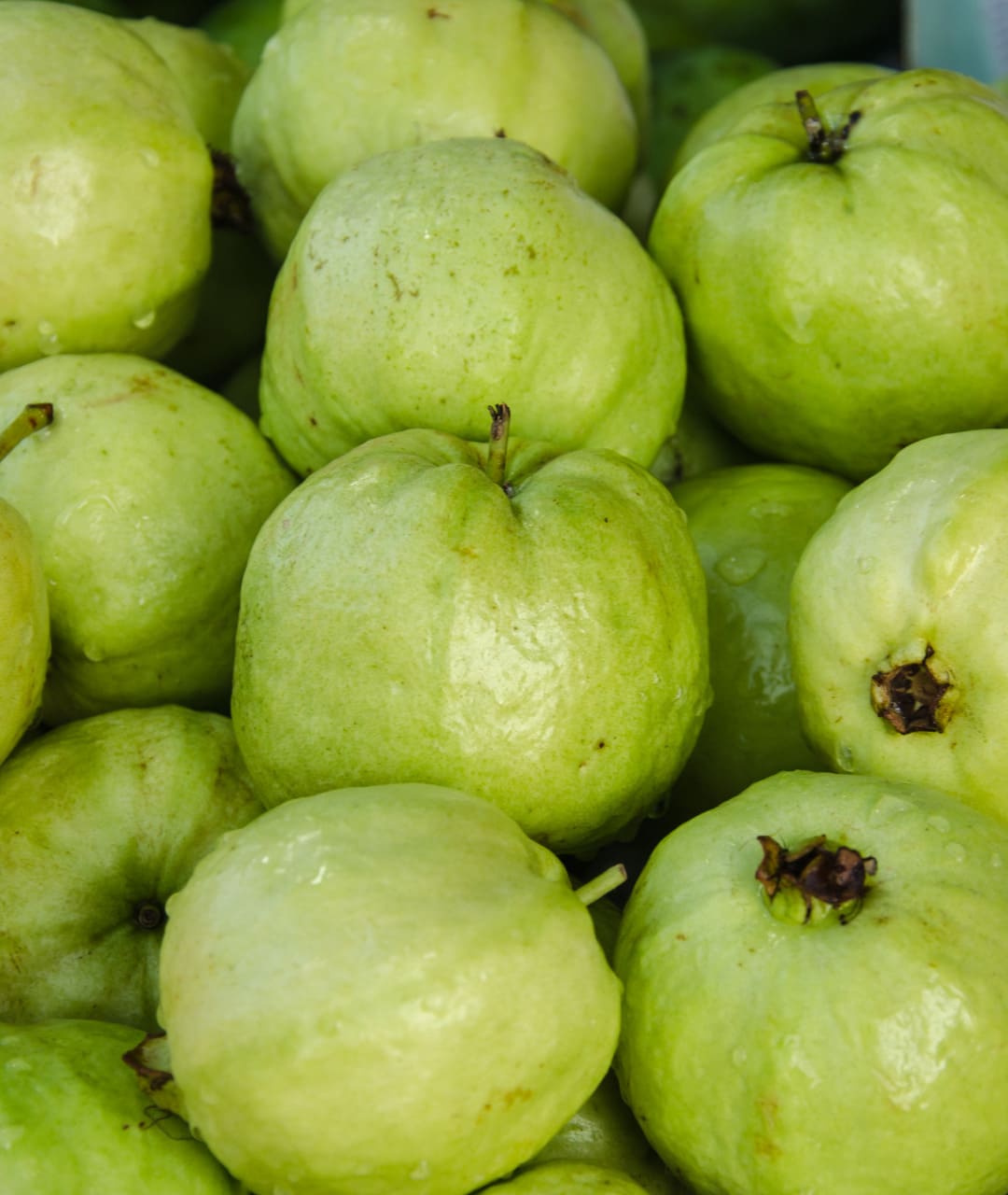
Guava
English: Guava
German: Guave
Sinhala: පේර (Pera)
Tamil: கொய்யா (Koyya)
Guava is definitely one of my favourite fruits in Sri Lanka. I could honestly eat it all the time, and I think it's one of the best snacks you can have between meals.
You might already know guava from Europe, but here you'll find it in different varieties and sizes. And just like with so many other fruits, it's worth trying a few different ones.
What does guava taste like?
Guava has a fresh, sweet to slightly tangy flavour. Depending on the variety and how ripe it is, the flesh can be quite crunchy or much softer. There are differences in colour too. Some guavas have white or pale green flesh, while others are beautifully pink inside.
The small seeds are generally edible, and so is the skin. So after washing the fruit, you can simply cut it up and enjoy it.
Guava with chilli and salt
One of my favourite ways to eat guava is with a little chilli and salt. Especially when the fruit is still quite firm and slightly sour, this combination is incredibly delicious. Fresh guava, a little salt and the heat of the chilli make such a good snack.
So if you spot guava at a fruit stall in Sri Lanka, definitely try it this way.
When is guava season in Sri Lanka?
Guava is available throughout much of the year in Sri Lanka. However, harvest times can vary depending on the variety, region and weather conditions.
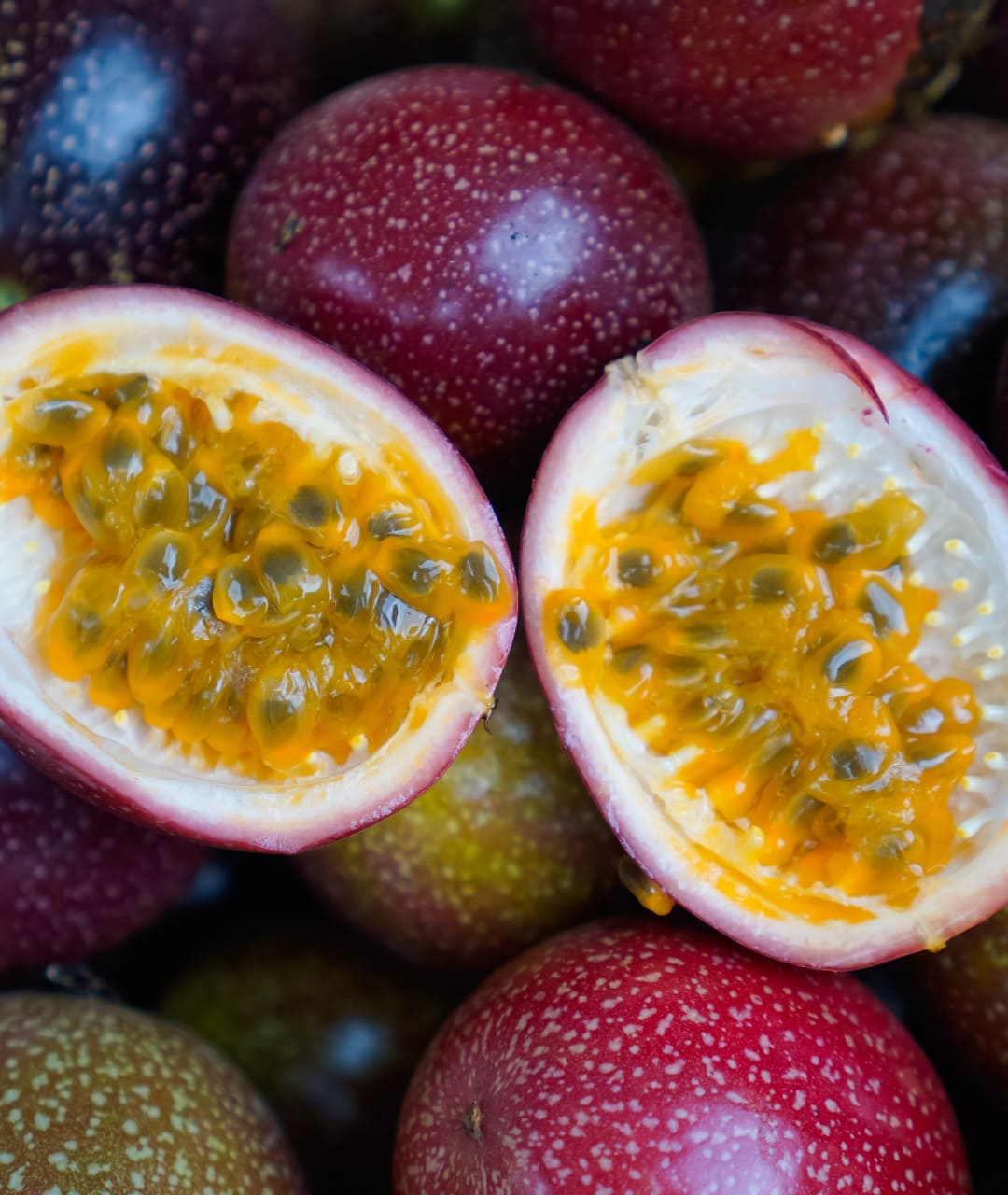
Passion Fruit
English: Passion Fruit
German: Passionsfrucht
Sinhala: වැල් දොඩම් (Wel Dodam)
Tamil: கொடித்தோடை (Kodi Thodai)
Passion fruit is one of those fruits that never fails to impress me with its intense flavour. Especially when it's fresh, it can be absolutely delicious. But you should know that fresh passion fruit can also be pretty sour.
What does passion fruit taste like?
The pulp is juicy, aromatic and has an intense combination of sweetness and acidity. Inside, you'll find lots of little black seeds surrounded by yellowish pulp. You can eat the seeds too, so simply cut the fruit in half and scoop out the inside with a spoon.
And if it's too sour for you on its own, there are plenty of other ways to enjoy it.
My absolute favourite drink: Passion Fruit Virgin Mojito
In Sri Lanka, you'll find some incredibly delicious drinks made with fresh passion fruit. My absolute favourite is a Passion Fruit Virgin Mojito. Fresh passion fruit, lime, mint and ice. For me, there's hardly a better drink on a hot day.
Fresh Passion Fruit Juice is also really delicious. It's often prepared with water and a little sugar to balance the fruit's natural acidity.
If you enjoy sour fruits, you should definitely try passion fruit fresh. And if that's a little too sour for your taste, just order a fresh juice or a Virgin Mojito instead.
When is passion fruit season in Sri Lanka?
Passion fruit is grown in different regions of Sri Lanka and can be available over extended periods of the year. Exact availability depends on the region, variety and weather.
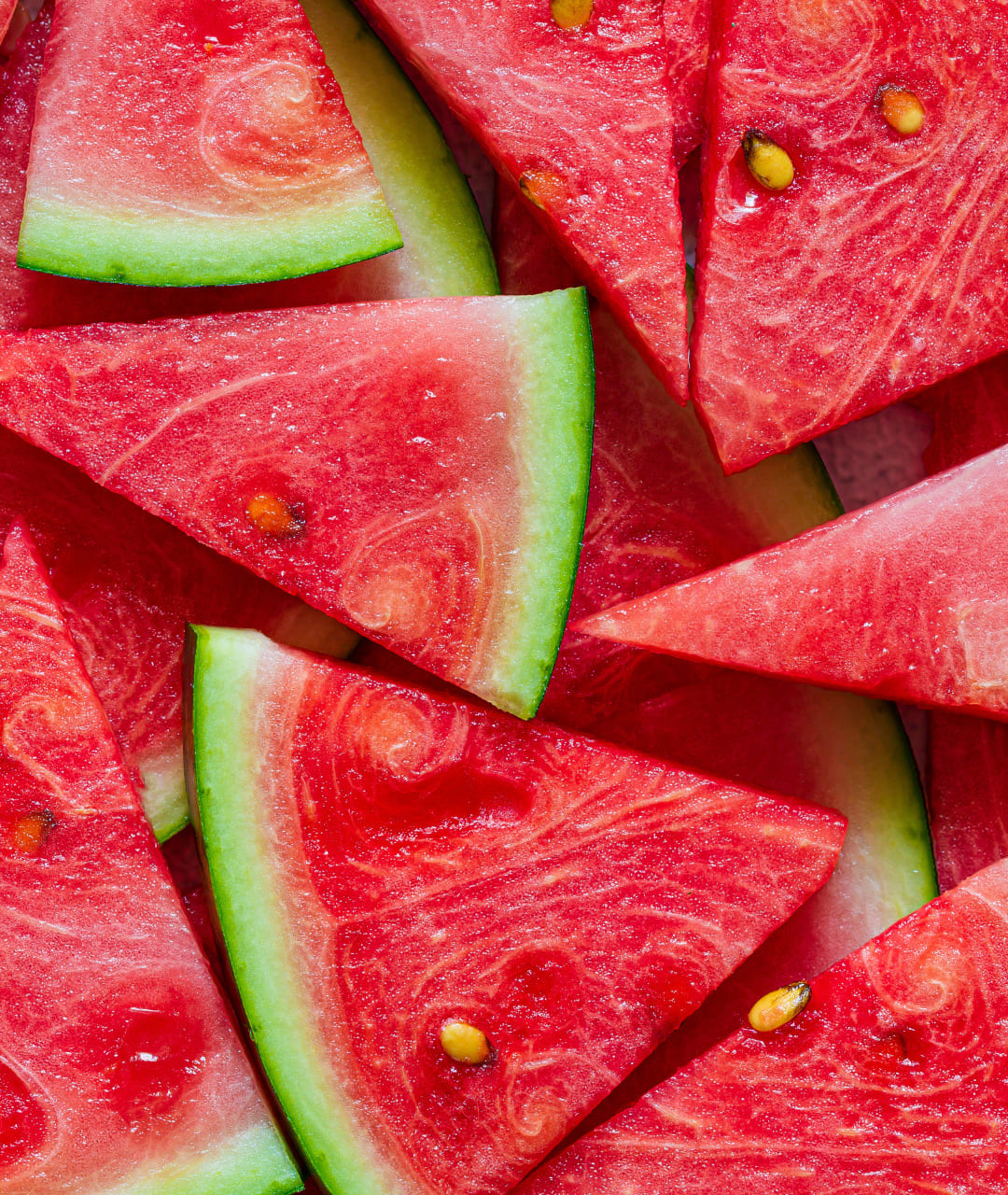
Watermelon
English: Watermelon
German: Wassermelone
Sinhala: කොමඩු (Komadu)
Tamil: தர்பூசணி (Tharpoosani)
Watermelon is probably one of those classics almost everyone loves. And seriously, what's better than a big slice of fresh watermelon on a hot beach day? Especially in Sri Lanka, where it's warm throughout the year, watermelon is simply part of life for me.
What does watermelon taste like?
Sweet, juicy and incredibly refreshing. Watermelon contains a lot of water, which makes it a wonderful snack, especially when temperatures are high.
I also particularly love watermelon when I'm sick. When I don't have much of an appetite, a slice of fresh, juicy watermelon is often exactly what I feel like eating. And that's actually another little reason why I love Sri Lanka so much. I can get watermelon here practically all year round.
Watermelon Juice in Sri Lanka
Watermelon isn't only eaten fresh here. It's also very popular as a juice, and you'll find Watermelon Juice on plenty of drink menus. Freshly prepared and served cold, it's definitely refreshing.
Personally, though, I prefer eating the fruit. For me, biting into a big slice of watermelon is simply better than drinking a glass of juice.
When is watermelon season in Sri Lanka?
Watermelons are grown in different parts of Sri Lanka. Because growing and harvest periods vary between regions, they're available practically throughout the year.
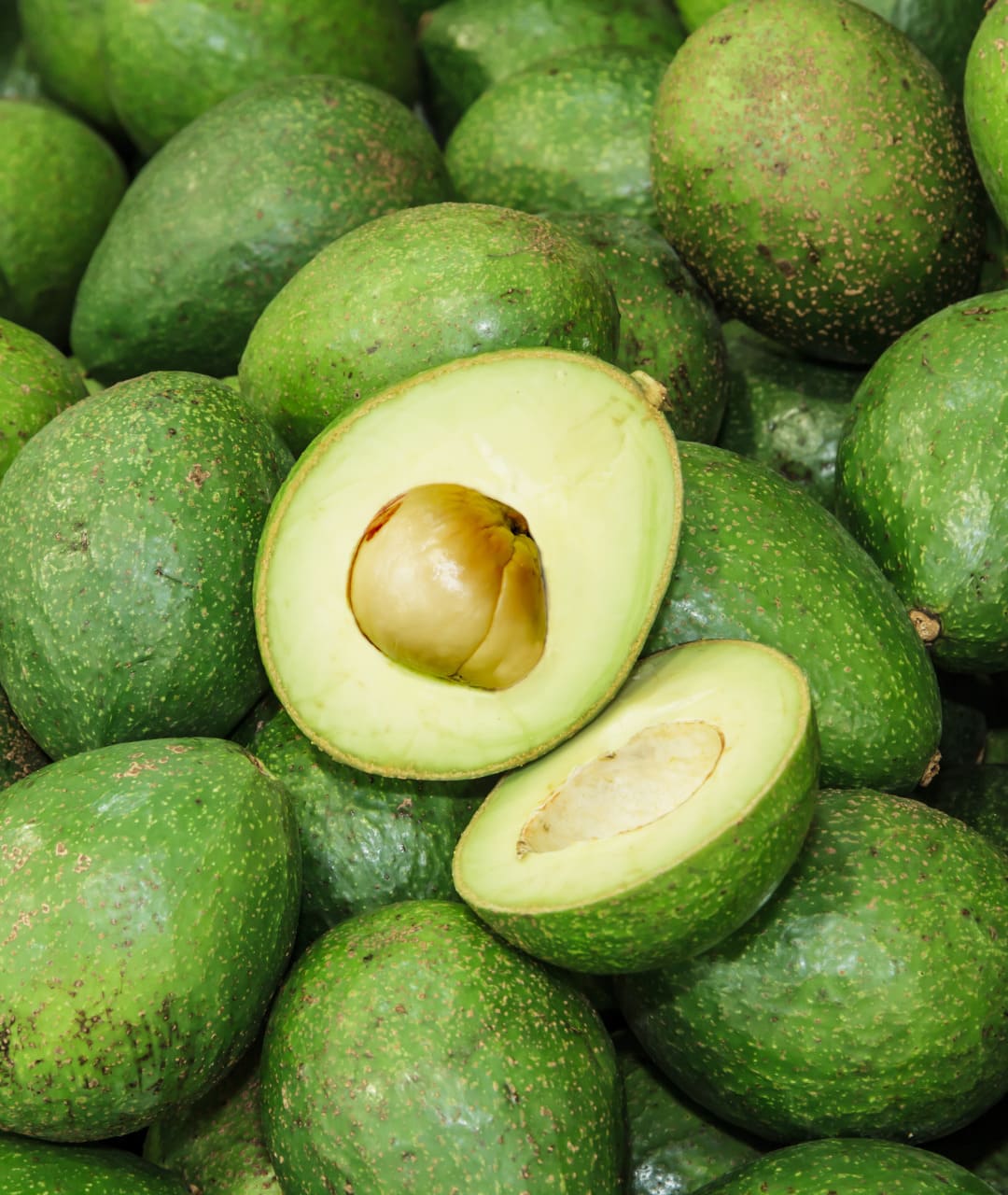
Avocado
English: Avocado
German: Avocado
Sinhala: අලිගැට පේර (Aligata Pera)
Tamil: வெண்ணெய்ப்பழம் (Vennai Pazham)
You probably know avocado mainly as guacamole, spread on toast or added to a salad. At least, that's how I knew it from Europe. But in Sri Lanka, I tried avocado as a drink for the very first time, and that's a completely different way to enjoy this fruit.
What does avocado taste like?
Avocado has a mild, slightly nutty flavour and a wonderfully creamy texture. Unlike many other fruits, it isn't naturally very sweet, which is exactly why it works so well in both savoury and sweet dishes.
Avocado Juice in Sri Lanka
While we mostly associate avocado with savoury food in Europe, it's also commonly prepared as a sweet drink in Sri Lanka. Creamy avocado drinks are especially popular, with the flesh blended with milk or a plant-based alternative and sugar. Sometimes sweetened condensed milk is used too, making the result more like a creamy shake than a traditional fruit juice.
Of course, you'll also find avocado toast, guacamole and other savoury avocado dishes in modern cafés and restaurants. But if you see Avocado Juice on a menu in Sri Lanka, now you know what to expect.
A little tip for vegans: Always ask about the ingredients when ordering avocado drinks. Regular milk or sweetened condensed milk is often used.
When is avocado season in Sri Lanka?
Avocados are grown mainly in suitable areas of Sri Lanka's wetter inland regions and highlands. Harvest periods vary depending on the variety and region, which is why avocados aren't necessarily equally available or equally priced throughout the year.
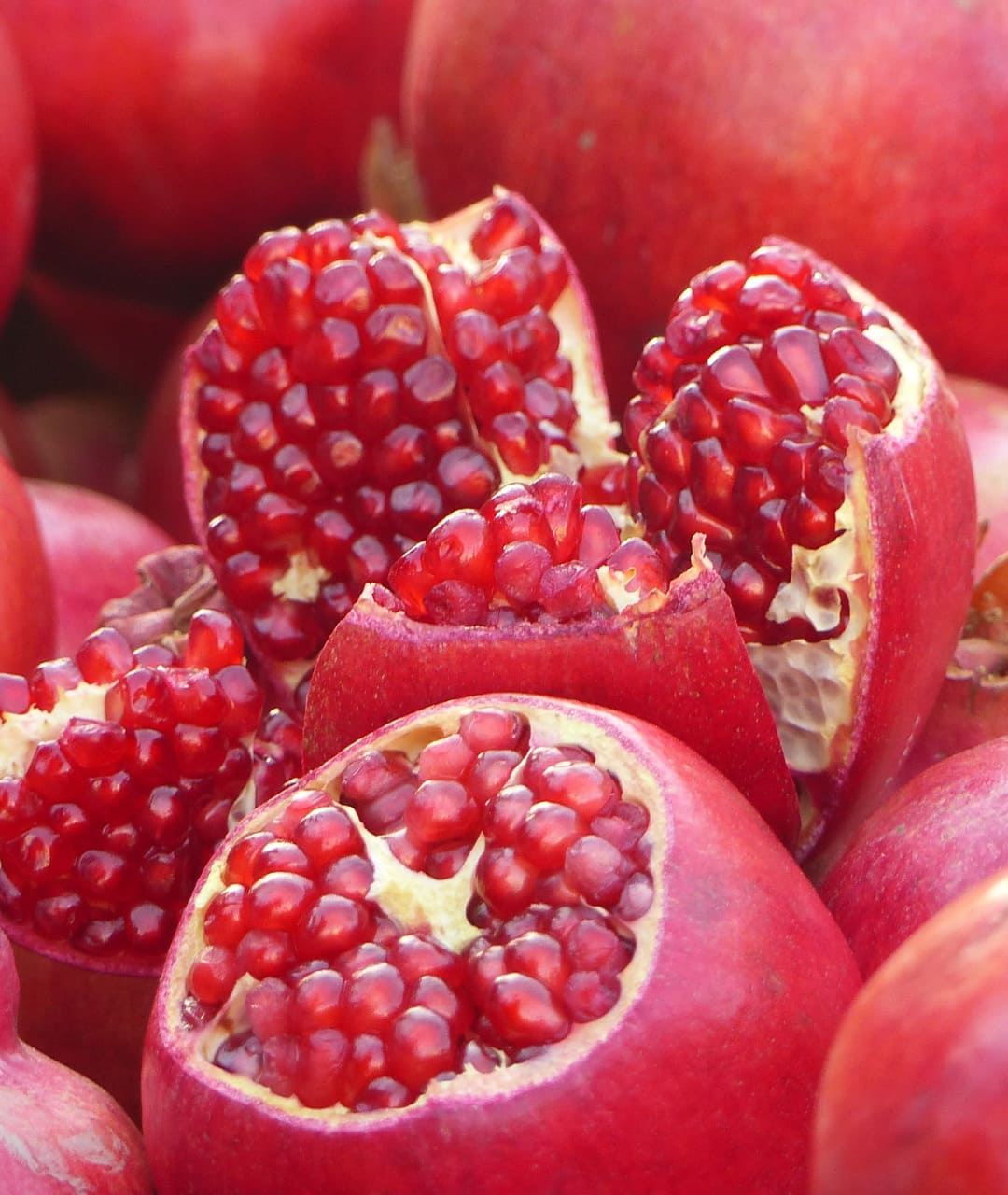
Pomegranate
English: Pomegranate
German: Granatapfel
Sinhala: දෙළුම් (Delum)
Tamil: மாதுளை (Mathulai)
Pomegranate is one of those snacks I could eat pretty much anytime. The little red seeds taste wonderfully fresh, sweet and slightly tangy. And somehow, they're just fun to eat.
What does pomegranate taste like?
The juicy seeds have a fruity, sweet and sour flavour. Depending on the variety and ripeness, the sweetness can vary quite a lot. You can simply eat the seeds on their own, serve them as a dessert or add them to different dishes.
I also love pomegranate in salads. The little red seeds don't just add beautiful colour. They also bring a lovely fresh, fruity flavour.
My tip: Chia Pudding with Mango and Pomegranate
One of my favourite combinations is Chia Pudding with Coconut Milk, fresh Mango and Pomegranate. The creamy coconut milk, sweet mango and slightly tangy pomegranate seeds go incredibly well together.
When is pomegranate season in Sri Lanka?
Pomegranates are grown locally in some parts of Sri Lanka, particularly in drier regions. However, part of the supply is also imported. That's why the origin, price and availability can vary depending on the season and what's available in the market.
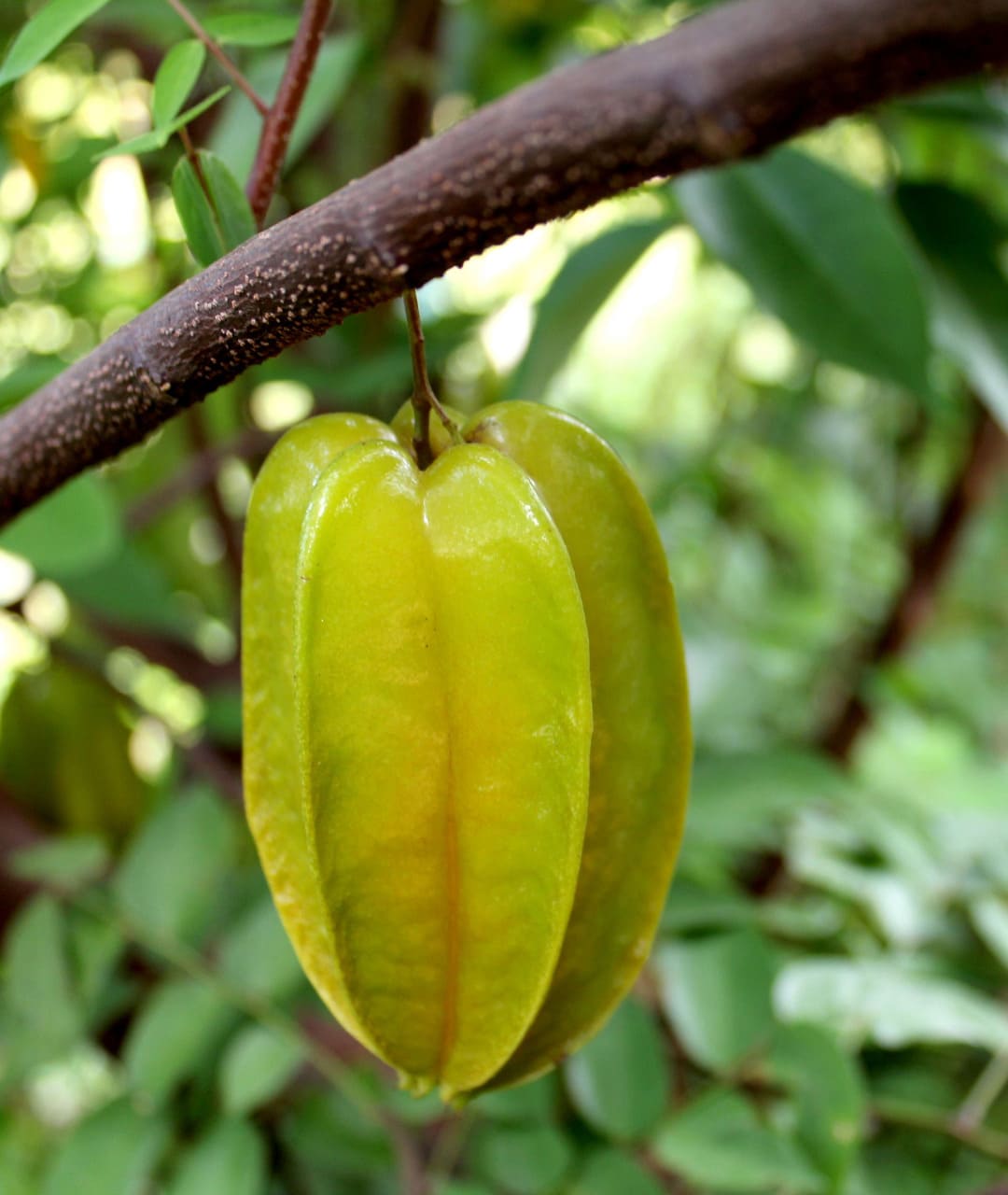
Star fruit
English: Star Fruit / Carambola
German: Sternfrucht / Karambole
Sinhala: කාමරංගා (Kamaranga)
Tamil: விளிம்பிப்பழம் (Vilimbi Pazham)
I actually knew star fruit from Switzerland already. I'd tried it there before, imported of course. But guys, eating a star fruit freshly picked straight from the tree for the first time is something completely different. I absolutely love it!
And it's not just the flavour that makes this fruit special. It really lives up to its name, because when you cut it into slices, you get these beautiful little stars.
What does star fruit taste like?
Star fruit is crunchy, incredibly juicy and, depending on the variety and ripeness, can be sweet or quite sour. What impressed me most was the difference between the imported fruit I knew from Switzerland and a freshly picked star fruit here in Sri Lanka.
Straight from the tree, it tastes completely different to me. Much juicier, more aromatic and incredibly refreshing. The skin is edible too, so after washing the fruit, you can simply cut it into slices or bite straight into it.
How is star fruit eaten?
My favourite way to eat it is fresh. Especially on a hot day, it's a wonderful snack. Because of its star shape, it's also perfect for decorating fruit platters, desserts or drinks.
In Sri Lanka, the more sour varieties are also used in different preparations, such as pickles and chutneys.
Important to know: People with kidney disease should avoid star fruit because it contains substances that can be dangerous when kidney function is impaired.
When is star fruit season in Sri Lanka?
Star fruit grows in Sri Lanka's tropical climate and can produce fruit over extended periods depending on the region and weather. However, availability can vary.
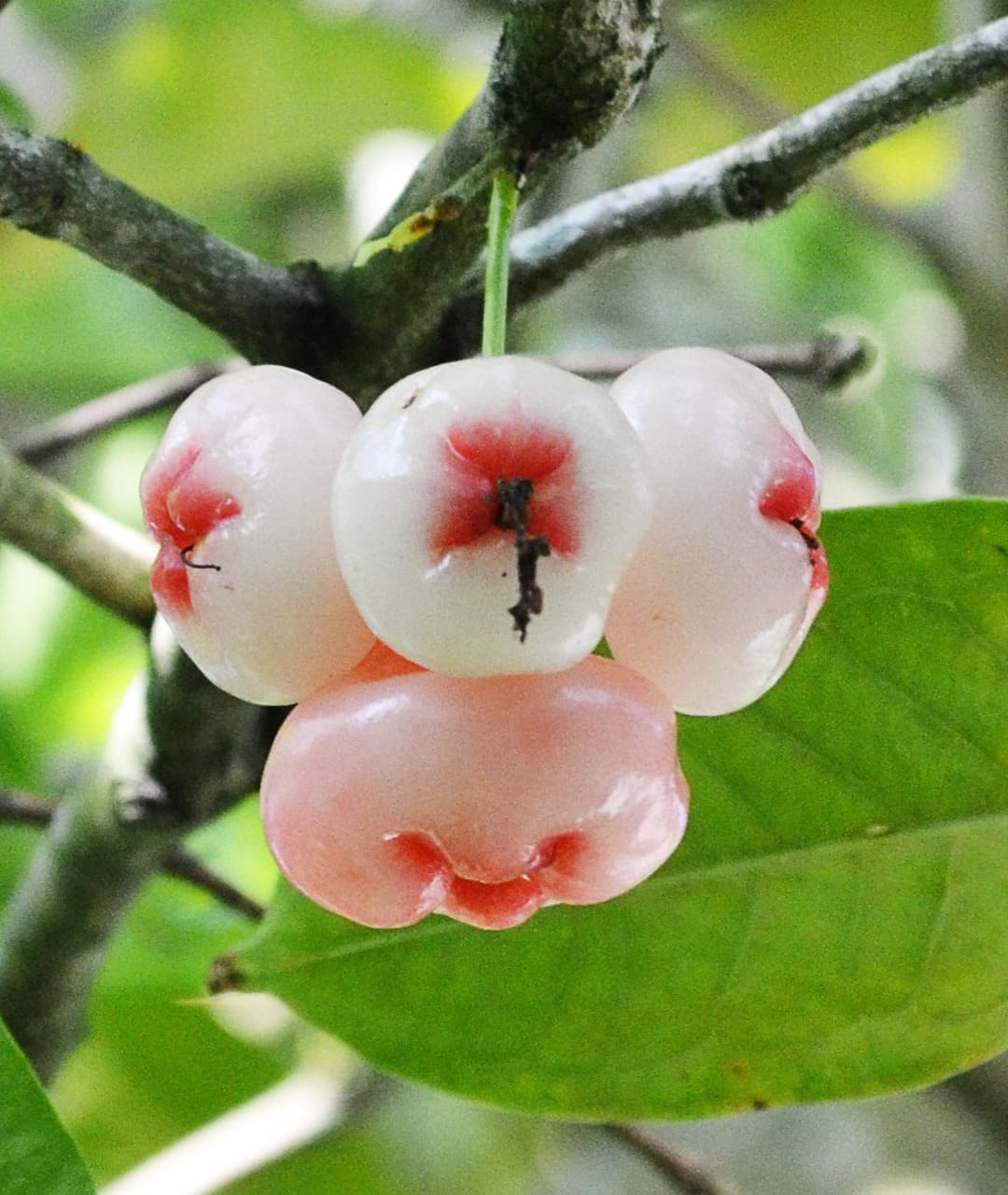
Rose Apple (Jambu)
English: Rose Apple / Water Apple
German: Rosenapfel / Wasserapfel
Sinhala: ජම්බු (Jambu)
Tamil: ஜம்பு (Jambu)
Jambu is definitely one of my favourite fruits in Sri Lanka. And the best part? We even have our very own Jambu tree in our garden. That makes me so happy, because honestly, what's better than eating fresh fruit straight from your own garden?
What does Jambu taste like?
Jambu is crunchy, incredibly juicy and has a rather mild, slightly sweet flavour. Depending on the variety, you'll find red, pink or lighter-coloured fruits. Many have a bell-like shape and a thin, smooth skin.
The flesh is pale and contains a lot of water, which makes it wonderfully refreshing, especially on a hot day. For me, Jambu is the perfect little snack between meals.
How is Jambu eaten in Sri Lanka?
I love eating Jambu fresh, but I also enjoy adding it to a fresh salad. You can also try it with a little salt and chilli. As with many other fruits in Sri Lanka, this combination works especially well when the fruit isn't particularly sweet.
By the way, several related fruits are sold under the name Jambu, which is why the shape, colour and flavour can vary.
When is Jambu season in Sri Lanka?
Jambu trees produce fruit at different times depending on the species, region and weather. In some cases, several harvests per year are possible.
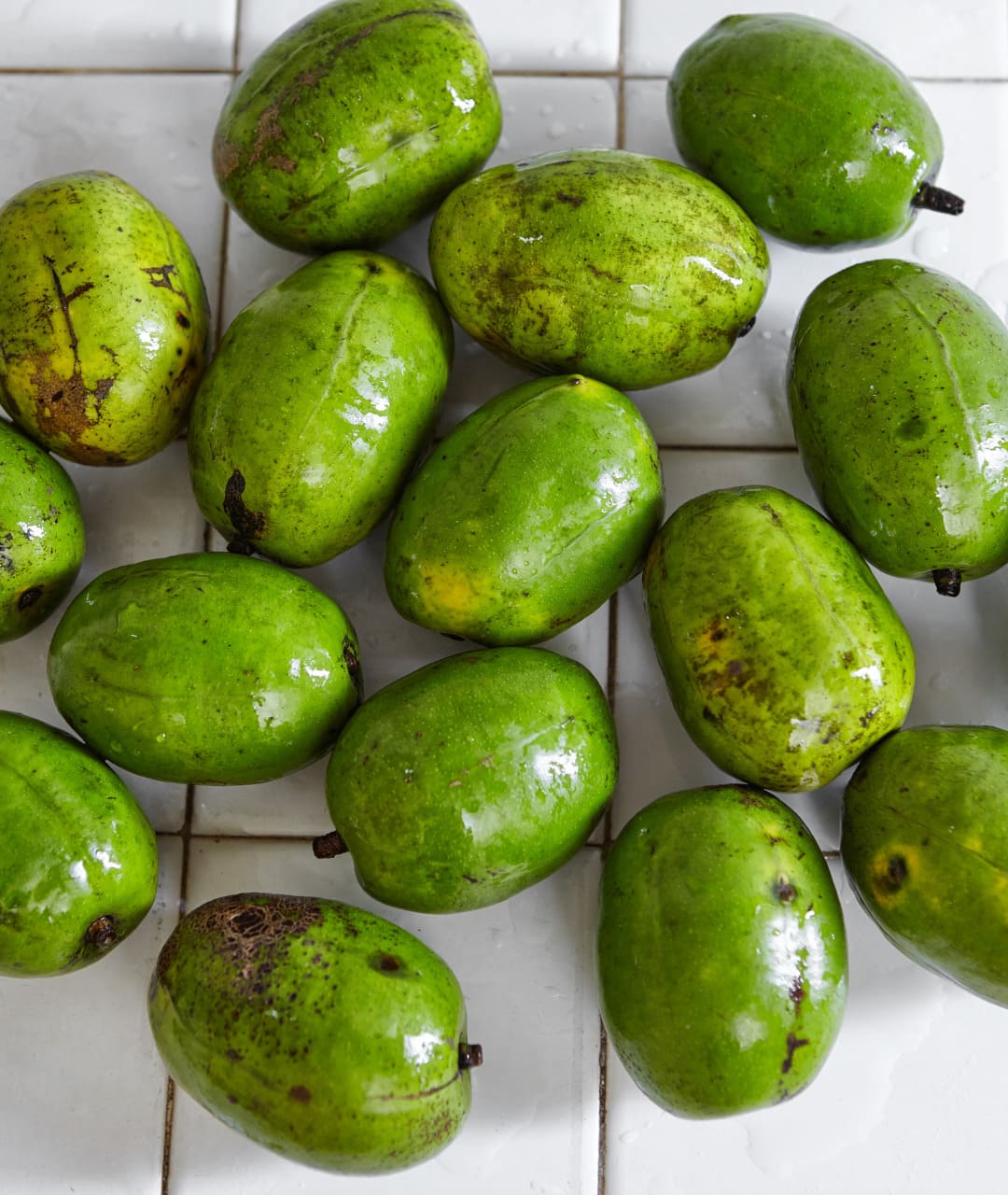
Ambarella
English: Ambarella / June Plum
German: Ambarella / Goldpflaume
Sinhala: ඇඹරැල්ලා (Amberella)
Tamil: அம்பரெல்லா (Ambarella)
Ambarella is one of those fruits you might never have seen before coming to Sri Lanka. The fruits are green to yellowish, roughly oval and look rather ordinary at first glance. But don't let that fool you.
What does ambarella taste like?
Ambarella is quite sour and crunchy, especially when unripe. As it ripens, it becomes softer and a little sweeter, although it often keeps a pleasant tanginess. Inside, there's a hard, fibrous stone surrounded by the flesh.
Ambarella in Sri Lankan cooking
In Sri Lanka, ambarella isn't only eaten fresh. It's also used in various dishes, with Ambarella Curry being one particularly well-known preparation. The fruit is cooked with spices, creating a wonderfully savoury, sweet and sour flavour.
Ambarella is also used for chutneys and pickles. And if you enjoy sour fruits, you can try it fresh with a little salt and chilli.
When is Ambarella season in Sri Lanka?
Ambarella is seasonally available in Sri Lanka. Depending on the region and weather, the trees can produce fruit at different times.
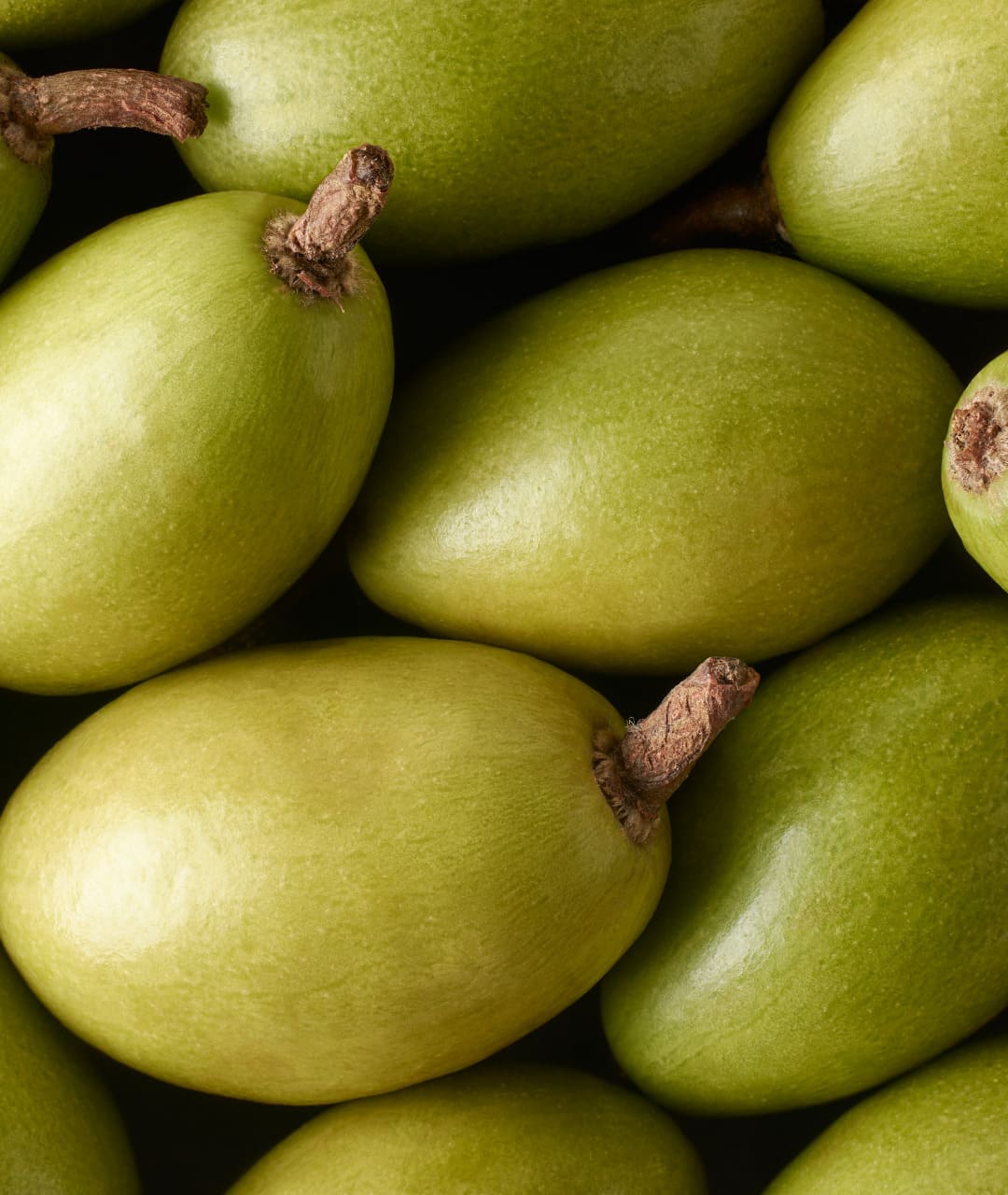
Ceylon Olive (Veralu)
English: Ceylon Olive
German: Ceylon Olive
Sinhala: වෙරළු (Veralu)
Tamil: வெரலு (Veralu)
Don't let the English name fool you. Although it's called Ceylon Olive, Veralu isn't the same as the traditional olives we know from the Mediterranean. Veralu is a small, green fruit that's particularly appreciated in Sri Lanka for its sour flavour.
What does Veralu taste like?
Veralu is sour, slightly bitter and can leave a somewhat dry, puckering feeling in your mouth, depending on how ripe it is. Inside, there's a hard stone.
If you enjoy fruits that aren't simply sweet, Veralu might be exactly your kind of thing.
How is Veralu eaten?
Veralu is particularly popular pickled or as a spicy snack with salt and chilli. It's also used in traditional pickles and other preparations. So if you're exploring a local market, keep an eye out for these little green fruits.
When is Veralu season in Sri Lanka?
Veralu is a seasonal fruit. When you'll find it fresh depends on the region, harvest and weather.
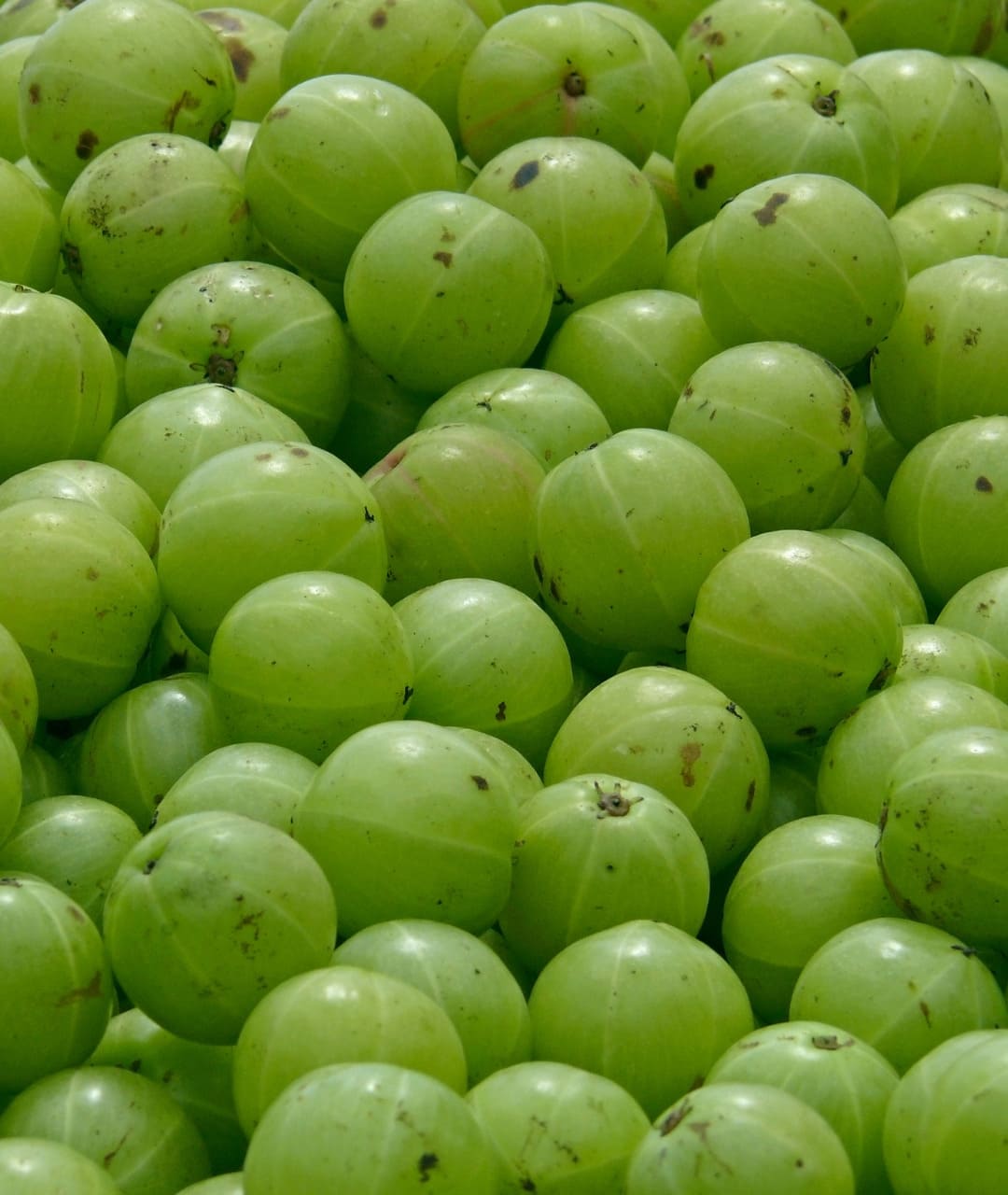
Indian Gooseberry (Nelli)
English: Indian Gooseberry / Amla
German: Indische Stachelbeere / Amla
Sinhala: නෙල්ලි (Nelli)
Tamil: நெல்லிக்காய் (Nellikai)
Nelli is one of those fruits where you should prepare yourself for a pretty intense flavour. The small, round fruits are greenish to yellow and look quite harmless. But that first bite can definitely surprise you.
What does Nelli taste like?
Nelli is very sour, slightly bitter and quite tart. One of its most distinctive characteristics is that dry, puckering sensation it can leave in your mouth.
If you mainly enjoy sweet, juicy fruits, Nelli probably won't be your first choice. Still, it's worth getting to know because it's used in several different ways in Sri Lanka.
Why is Nelli well known?
Nelli is naturally rich in vitamin C and also plays a role in traditional South Asian food and wellness practices. In Sri Lanka, you'll find Nelli as juice, pickled or used in various traditional preparations.
When made into Nelli Juice, the intense sourness is often balanced with water and sugar.
When is Nelli season in Sri Lanka?
Nelli is grown in Sri Lanka and is seasonally available depending on the growing region and harvest period.
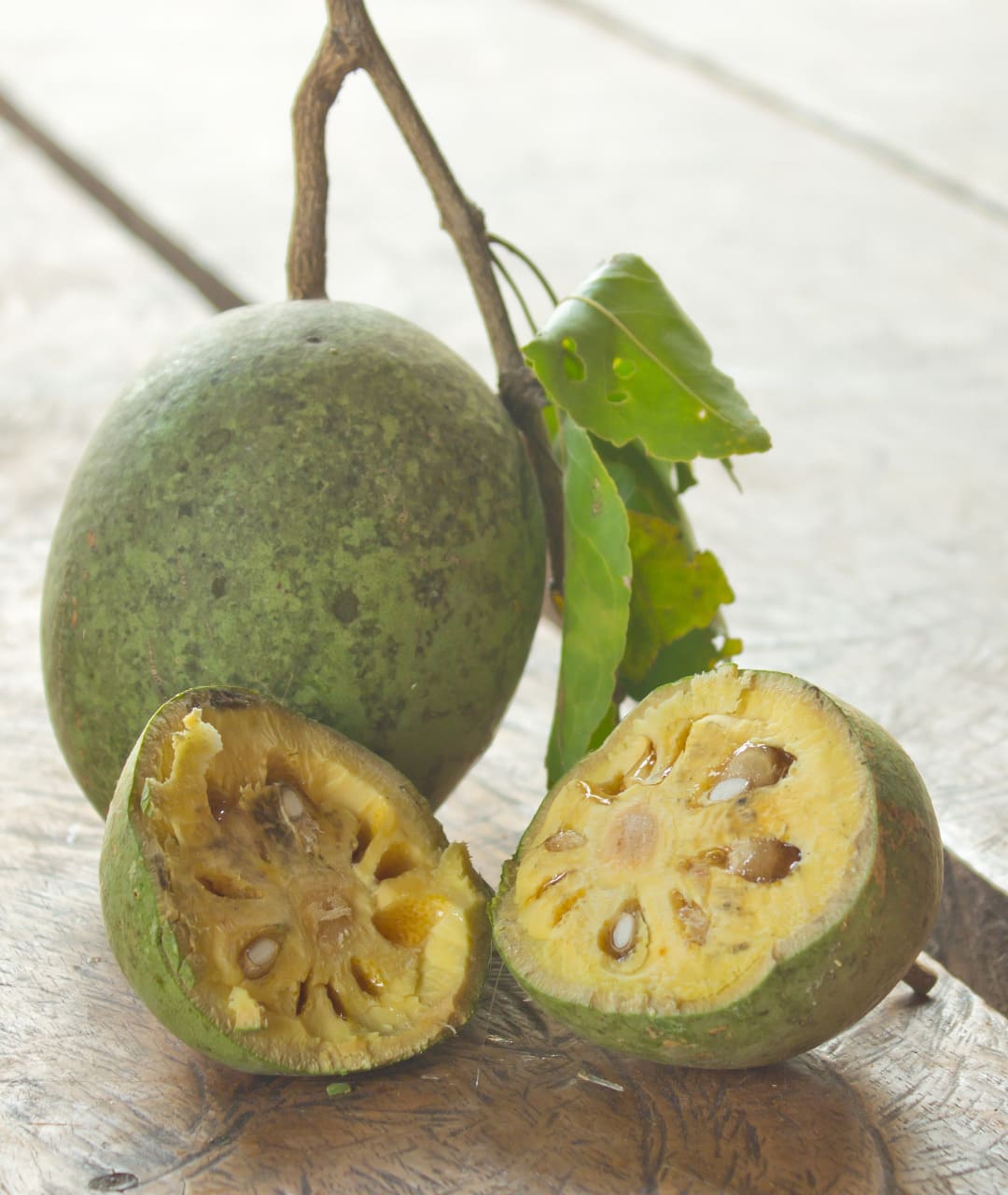
Beli (Bael)
English: Bael / Beli Fruit
German: Bengalische Quitte / Bael
Sinhala: බෙලි (Beli)
Tamil: வில்வம் (Vilvam)
Beli is another fruit you're probably not going to come across very often in Europe. From the outside, it looks like a roundish fruit with a rather hard shell. To get to the flesh inside, the shell needs to be cracked open.
What does Beli taste like?
The flesh is yellowish to orange, thick and aromatic. Depending on how ripe it is, it has a sweet, slightly tangy flavour. The texture is quite unusual too, because Beli isn't nearly as juicy as mango or watermelon.
Beli is a drink in Sri Lanka
In Sri Lanka, Beli is also well known as a drink. The flesh can be used to make a thick juice, often mixed with water and a little sugar.
There's also Beli Mal, a traditional herbal tea made from dried flowers of the Beli tree. Beli is associated with digestion in some traditional practices, although that doesn't mean Beli drinks should be considered a replacement for medical treatment.
When is Beli season in Sri Lanka?
Beli is seasonally available. The exact harvest period can vary depending on the region and weather.
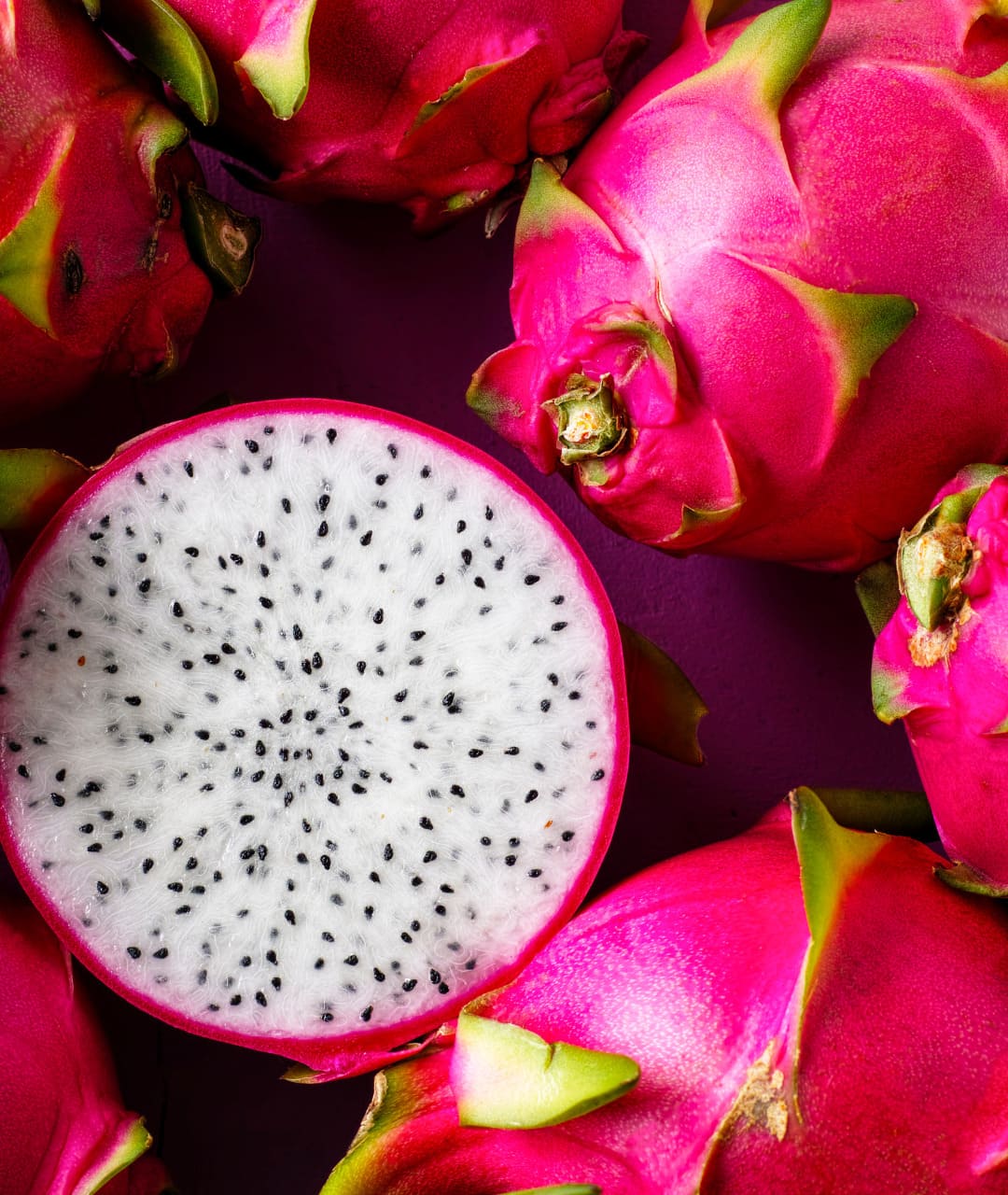
Dragon Fruit
English: Dragon Fruit / Pitaya
German: Drachenfrucht
Sinhala: ඩ්රැගන් ෆෘට් (Dragon Fruit)
Tamil: டிராகன் பழம் (Dragon Pazham)
Dragon fruit is probably one of the most beautiful fruits you'll discover at a market. With its bright pink skin and green tips, it almost looks a little artificial. And the inside is just as eye-catching.
What does dragon fruit taste like?
Dragon fruit has a mild, slightly sweet flavour and juicy flesh filled with lots of tiny black seeds. Depending on the variety, the flesh can be white or a vibrant pink to red.
The texture reminds me a little of kiwi, although dragon fruit usually tastes much milder. You can simply cut the fruit in half and scoop out the flesh with a spoon, or remove the skin and cut it into pieces.
Dragon fruit in Sri Lanka
Dragon fruit is now also grown in Sri Lanka. You'll find it at markets, supermarkets and on fruit platters in hotels and restaurants.
It's also great for smoothies, fruit salads and desserts. The varieties with red flesh create an especially beautiful, intense colour.
When is dragon fruit season in Sri Lanka?
Dragon fruit is cultivated in different growing areas of Sri Lanka. Depending on the location and weather, harvesting takes place in several periods, which means the fruit can be available over extended parts of the year.
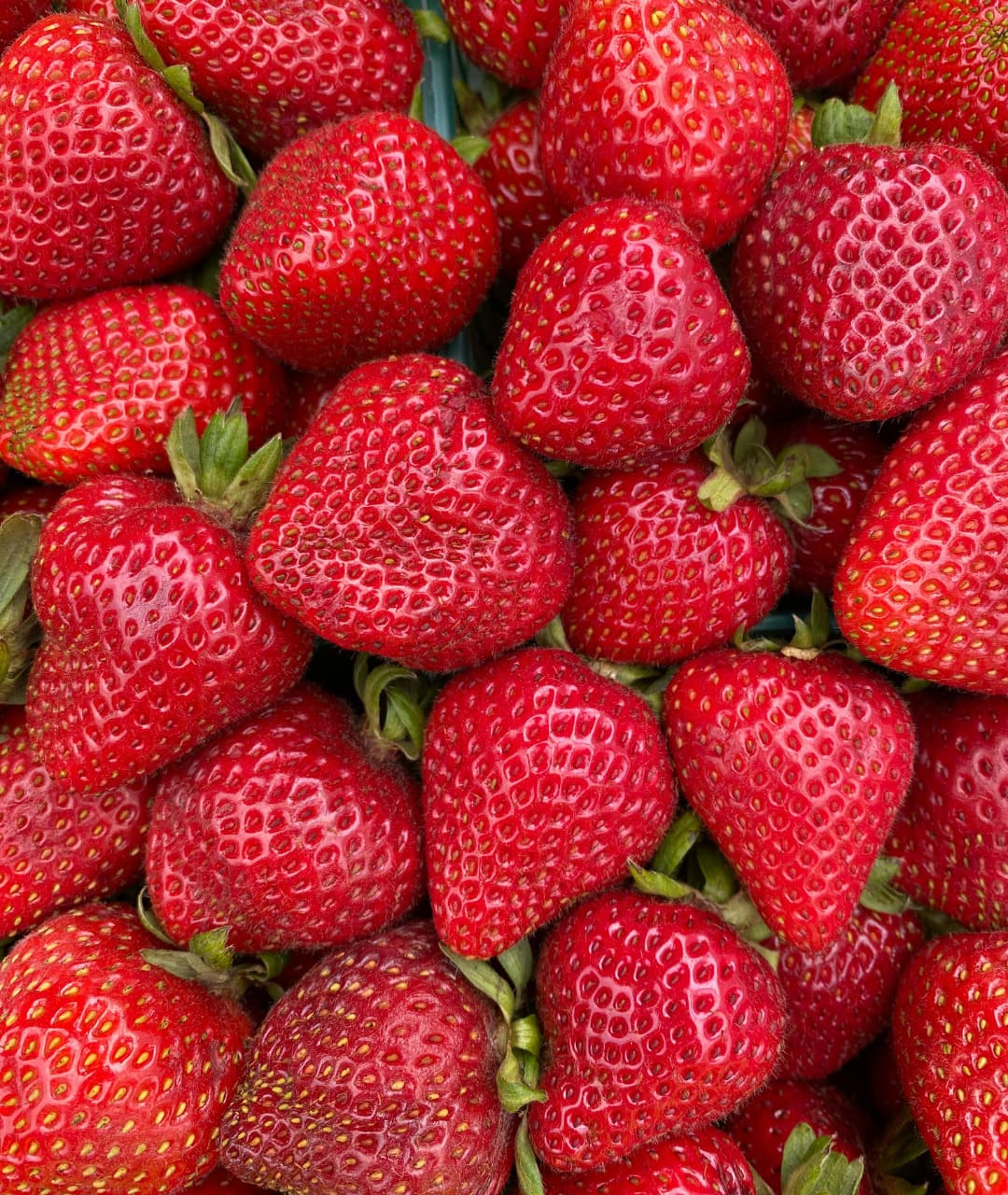
Strawberry
English: Strawberry
German: Erdbeere
Sinhala: ස්ට්රෝබෙරි (Strawberry)
Tamil: ஸ்ட்ராபெரி (Strawberry)
Strawberries in Sri Lanka? Yes, really! I was honestly quite surprised when I found out that strawberries are grown here too.
After all, when we think of Sri Lanka, we probably picture mangoes, papayas, coconuts and other tropical fruits. Strawberries weren't exactly what I expected.
Where do strawberries grow in Sri Lanka?
Strawberries are mainly grown in the cooler highland regions, especially around Nuwara Eliya. Because of the higher altitude and much cooler climate, the growing conditions there are completely different from places like Negombo on the coast.
So if you're visiting Nuwara Eliya, you'll also come across strawberry farms, fresh strawberries and various strawberry products.
What do strawberries taste like in Sri Lanka?
Now, as a Swiss woman, I have to admit something. As lovely as it is that strawberries grow here, for me, they just don't compare to Swiss strawberries.
Sorry, but I genuinely think we have the best strawberries in Switzerland.
The strawberries I've tried in Sri Lanka so far have usually been a little smaller and not quite as intense in flavour as the ones I know from home. Of course, that always depends on the variety, ripeness and harvest.
Maybe one day I'll discover the perfect Sri Lankan strawberry that proves me wrong. But until then, Swiss strawberries are still number one for me.
Strawberries in Nuwara Eliya
If you're visiting Nuwara Eliya, it's definitely worth trying the locally grown strawberries anyway. Depending on where you go, you'll also find strawberry jam, desserts and drinks alongside the fresh fruit.
When is strawberry season in Sri Lanka?
Strawberries are mainly grown in Sri Lanka's cooler highland regions. Availability depends on the growing method, weather and harvest period, which is why locally grown strawberries aren't equally available everywhere or throughout the year.
Imported Fruits in Sri Lanka
Of course, Sri Lanka doesn't only have tropical fruits grown on the island. You'll also find apples, pears, grapes, oranges and many other fruits that we're familiar with from Europe. However, there's one important difference: a large proportion of these fruits are imported.
Apples and pears, in particular, mostly come from abroad, as Sri Lanka's tropical climate isn't ideal for large-scale cultivation of many European fruit varieties. With oranges and grapes, the situation is a little different. These fruits are also imported, but certain citrus fruits and grapes are grown locally in Sri Lanka too.
Why are imported fruits often more expensive?
If you've ever stood in front of a supermarket shelf filled with imported apples, pears or grapes in Sri Lanka, you've probably noticed that the prices can be surprisingly high.
There are several reasons for this, including transport costs, import duties and storage. Fruits that need to be transported and stored under refrigeration can become considerably more expensive than locally grown fruits.
That's why it's worth trying fruits that are currently in season and grown right here in Sri Lanka. Not just because of the price, but especially because of the flavour. And who knows? You might discover a new favourite fruit you've never even heard of before.
How Much Do Fruits Cost in Sri Lanka?
One question many travellers probably have is: Are fruits in Sri Lanka actually cheap?
The answer is: It depends.
Sri Lanka has an incredible variety of locally grown fruits. Especially during the main season, many of them can be bought at attractive prices. However, that doesn't automatically mean every fruit is always cheap.
Why can fruit prices vary so much?
Prices depend on several factors. The season, weather, harvest quantities and, of course, where you shop all play an important role.
During the main season, a fruit might be considerably cheaper than outside its season. Heavy rainfall or poor harvests, on the other hand, can cause prices to rise.
There can also be big differences between a local market, a small roadside fruit stall and a supermarket. And sometimes prices even change within just a few days.
Where is the best place to buy fruits in Sri Lanka?
Personally, I always find it fascinating to wander through local markets in Sri Lanka. Not only will you discover an incredible variety of fruits, but you can often watch how they're prepared, cut open or sold right in front of you.
Of course, you'll also find plenty of fruits in supermarkets and at small roadside stalls. My tip is to explore different places and compare prices. It's especially worth doing this with seasonal fruits.
And if you come across a fruit you don't recognise, simply ask what it's called or how to eat it. Quite often, sellers will even let you taste a piece before deciding whether to buy it. So don't be shy about asking questions and trying something new. That's how you sometimes discover the most interesting fruits, and maybe even a new favourite.
Especially if you have an allergy or severe intolerance, having the most important phrases in Sinhala or Tamil ready on your phone can be very helpful.
Sri Lanka Fruit Season Calendar: When Are Fruits in Season?
Sri Lanka offers an incredible variety of fresh fruits throughout the year. However, that doesn't mean every fruit is equally available in every season.
One thing I find particularly interesting is how the selection at local markets changes throughout the year. While you'll find bananas, papayas and coconuts practically all the time, there are other fruits you sometimes have to wait for.
Our Sri Lanka Fruit Season Calendar shows you when different fruits are generally most available.
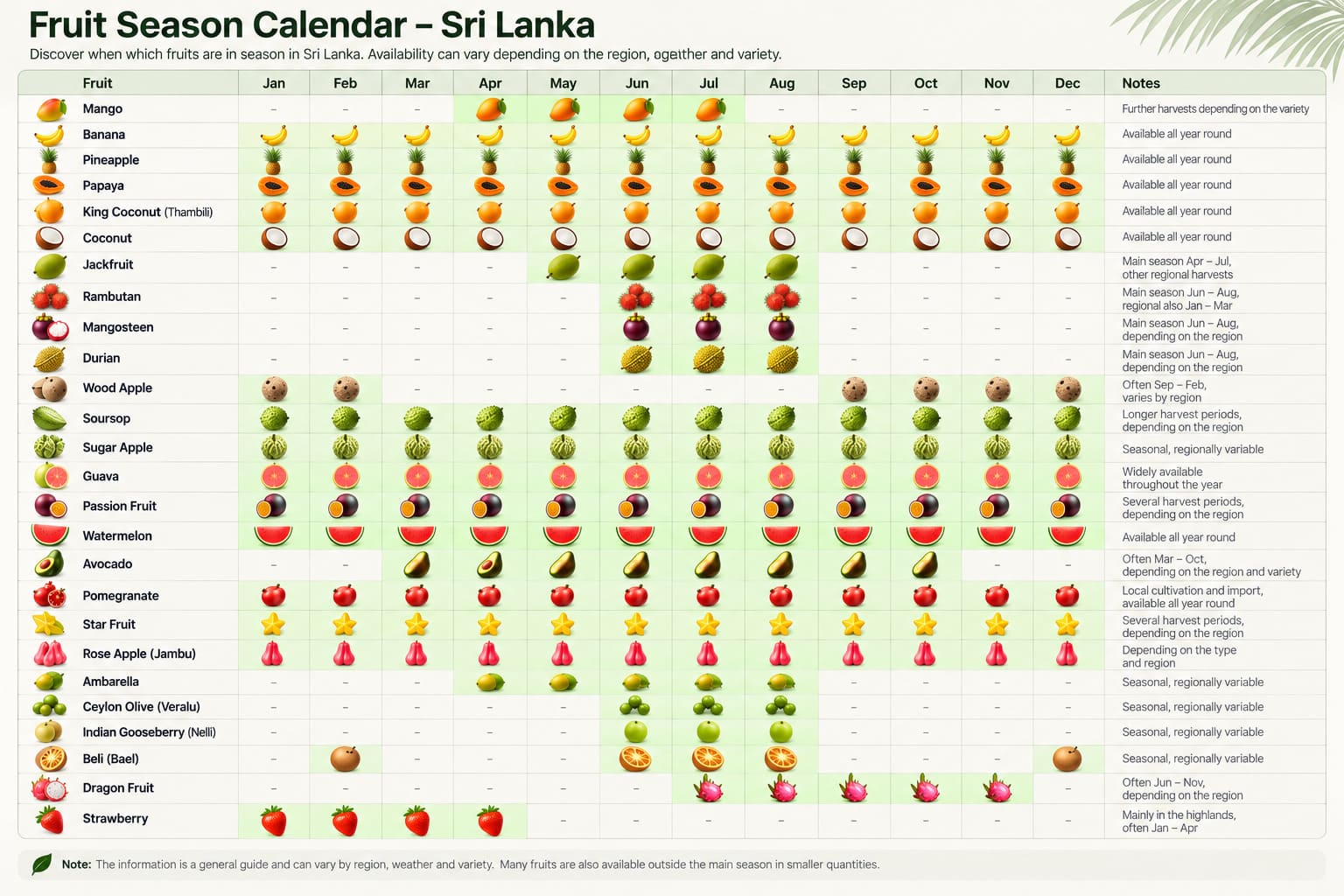
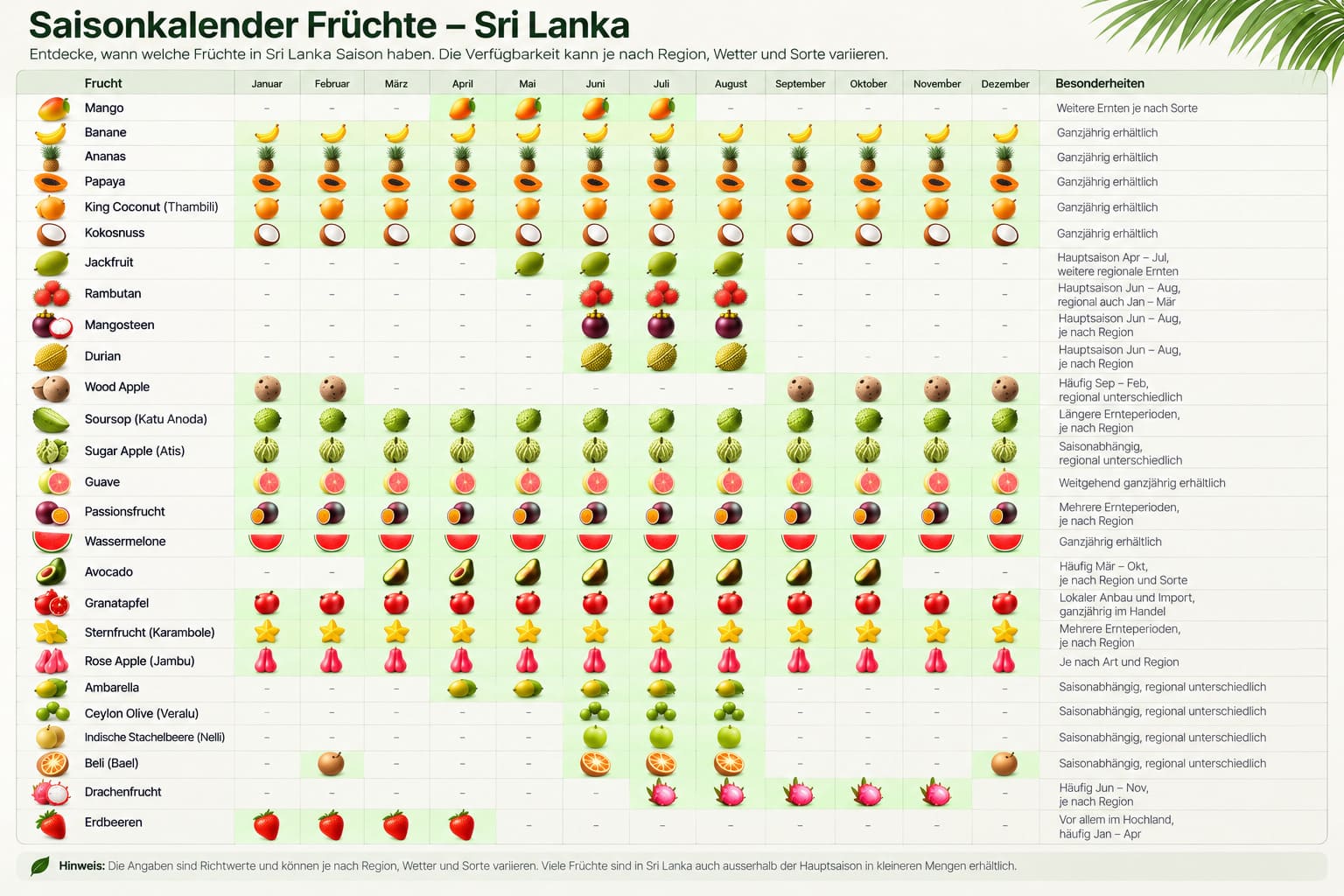
Please keep in mind: The dates are approximate, not guaranteed harvest periods. Fruit seasons can vary depending on the region, rainfall, weather and growing conditions.
For some less common fruits, exact monthly harvest information isn't consistently available, so we've deliberately avoided assigning specific months where we couldn't establish a reliable general season.
My tip: Ask the sellers at local markets which fruits are particularly good at the moment. They usually know best what's freshly harvested. And as I mentioned earlier, you can often even taste a piece before buying.
My Conclusion: Sri Lanka Is a Paradise for Fruit Lovers
I think you've probably noticed by now that I absolutely love fruits. And Sri Lanka makes it incredibly easy to love them even more.
What continues to amaze me isn't just the incredible variety, but also how differently fruits are used here. Something we might simply eat as a sweet snack in Europe might be served with chilli and salt here or turned into a delicious spicy curry.
And even fruits I already knew from Switzerland have sometimes felt like completely new discoveries in Sri Lanka.
Of course, I don't love everything. Salman can happily keep his Wood Apple Juice, and I don't think Katu Anoda and I are ever going to become best friends. But I could eat fresh guava, Jambu or ripe jackfruit every single day.
And the best part? I'm still discovering new fruits, varieties and ways of preparing them all the time.
So if you're travelling to Sri Lanka, make sure you try something you've never seen before. Ask questions at the market, let someone show you how to eat a fruit and don't be afraid to try something new. You might just discover your new favourite fruit.